
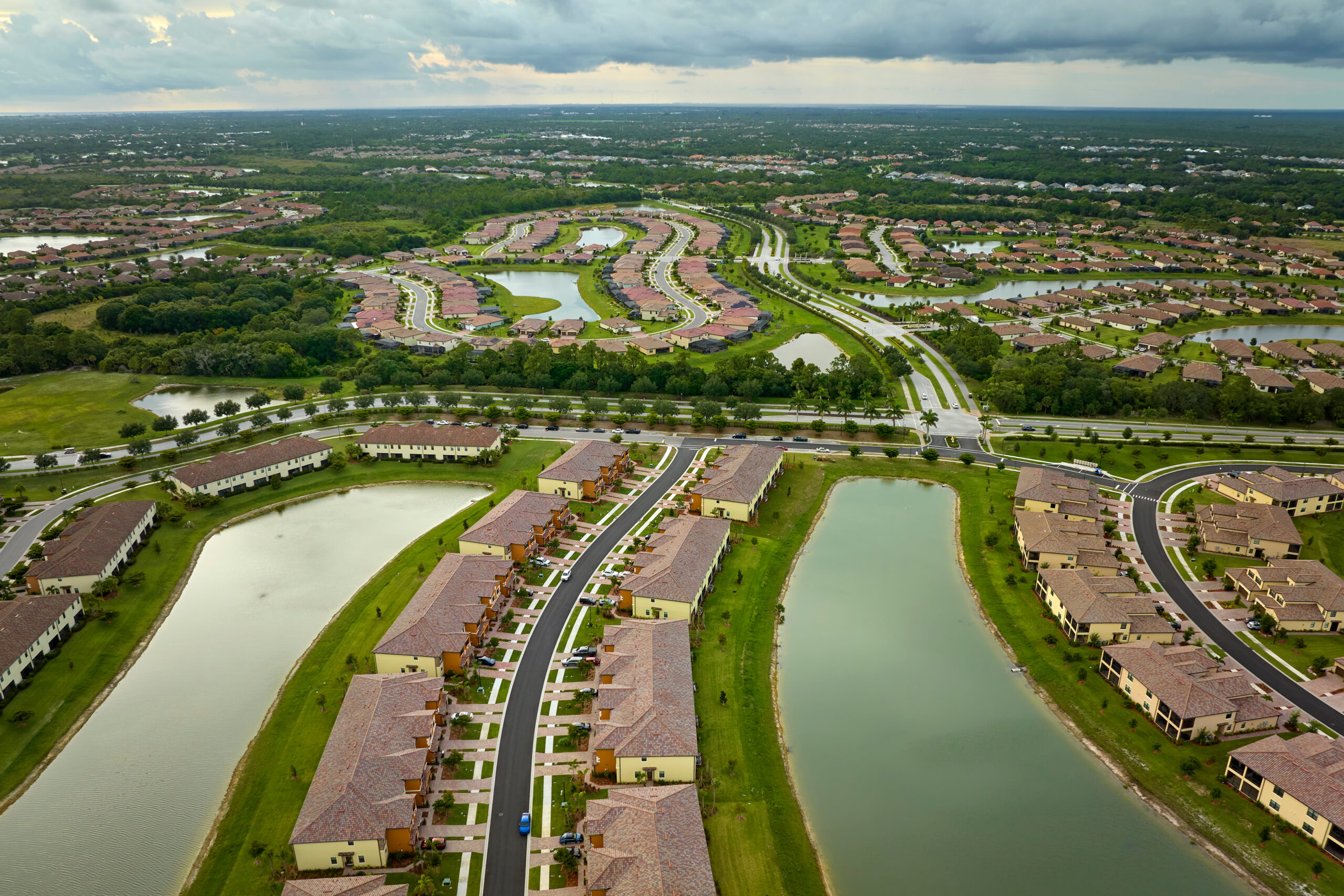
Florida’s updated stormwater regulations have raised the bar for water quality treatment and long-term system performance. As discussed in our earlier overview of the Statewide Stormwater Rule, these requirements affect far more than environmental permitting. They are changing how sites are evaluated, planned, designed, constructed and maintained.
Stormwater is now a key consideration in site feasibility and project economics for developers, municipalities, institutional owners and real estate professionals. Addressing it early can help preserve developable acreage, reduce redesign and support a more predictable path through permitting. Waiting until a conceptual layout is largely complete can limit options and introduce avoidable risk. At the same time, the updated requirements reflect a broader environmental objective: supporting continued growth while improving water quality and protecting Florida’s rivers, lakes, wetlands, springs, estuaries and coastal waters.
At a Glance: Florida’s Statewide Stormwater Rule
- Enhanced statewide water quality treatment standards with increased emphasis on nutrient reduction and treatment performance.
- Expanded Operations and Maintenance (O&M) requirements that extend owner responsibilities beyond project completion.
- Greater integration of engineering, environmental planning, and lifecycle asset management throughout project development.
Stormwater Planning Starts with the Site
Every property presents a different combination of opportunities and constraints. Wetlands, surface waters, soils, groundwater elevations, floodplains, existing drainage patterns and watershed-specific requirements can all influence where and how development can occur. Civil engineers evaluate these conditions alongside environmental professionals, surveyors, geotechnical engineers and planners to develop a more complete picture of the site before major decisions are made.
Early coordination helps determine whether the proposed development program is realistic for the property and can influence building placement, roadway alignments, parking layouts, utility corridors, grading strategies and construction phasing. This early involvement also allows civil engineers to serve as strategic advisors during acquisition, due diligence and entitlement, helping owners identify opportunities and constraints before significant development decisions are made. The new requirements make this coordination increasingly important. Nutrient treatment criteria, operation and maintenance obligations and applicable Water Management District or local standards should be considered together rather than as separate tasks. Depending on the location, Basin Management Action Plans, impaired waters and other watershed initiatives may add another layer to the design and permitting strategy.
How the Regulations Influence Civil Design
What This Means for Owners and Developers
Integrating environmental due diligence, engineering analysis, and permitting strategy before land acquisition or conceptual design can reduce entitlement risk, preserve developable area, improve project economics, and minimize costly redesign later in the development process.
Florida’s rules maintain a performance-based framework, giving project teams flexibility to select stormwater Best Management Practices (BMPs) suited to the property. Potential approaches may include wet detention, dry retention, bioswales, exfiltration systems, underground storage and other treatment technologies. The right solution depends on site conditions, available land, anticipated pollutant removal, constructability, cost and long-term maintenance needs.
In some cases, green infrastructure and Low Impact Development practices can complement conventional systems. When appropriate for the site, these strategies may improve treatment performance while supporting landscape, habitat and resilience goals. They are not one-size-fits-all solutions, however. Each alternative must be evaluated against regulatory criteria and the project’s practical needs.
Digital terrain models, geographic information systems and hydrologic and hydraulic modeling allow teams to test multiple configurations before a project advances too far. Comparing alternatives early can help owners balance compliance, site efficiency, earthwork, utility coordination, lifecycle costs and maintainability. It can also identify conflicts that would be more difficult and expensive to resolve during final design or construction.
Constructability remains a critical part of that evaluation. A compliant stormwater concept must also support efficient grading, balanced earthwork, utility installation and phased construction. Coordinating these elements from the beginning helps reduce field conflicts, schedule impacts and unnecessary cost.
Designing for Long-Term Performance
The Statewide Stormwater Rule reinforces that responsibility does not end when construction is complete. Permit conditions may require routine inspections, maintenance, documentation and reporting, with inspection frequency based on the system and permit. Qualified inspectors are also required for applicable inspections under newer permits.
These obligations make maintainability a design consideration, not an afterthought. Owners should understand who will operate the system, how components will be accessed, what routine maintenance will cost and how records will be managed. Applicants may also need to establish the legal, financial and operational framework for long-term operation and maintenance.
A system that performs well on paper but is difficult to inspect or maintain can create operational challenges and future compliance risk. Designing with the full lifecycle in mind helps protect both the asset and the surrounding community.
The Value of an Integrated Approach
Stormwater compliance is most effective when environmental review and civil design advance together. During site selection and due diligence, a coordinated team can evaluate drainage capacity, environmental constraints, permitting pathways and infrastructure needs before land is acquired or development plans are finalized. That information gives owners a stronger basis for decisions about project scope, schedule and investment.
At Colliers Engineering & Design, our civil engineering, environmental sciences, water resources, surveying, planning and permitting professionals work together as part of an integrated project delivery strategy to help clients identify risk earlier, coordinate with agencies, optimize site layouts and design systems for long-term operation. Certain existing permits, redevelopment projects and qualifying developments may be eligible for grandfathering or other compliance pathways. Applicability depends on project-specific facts and timing, so early coordination with the appropriate permitting agency and experienced professionals is essential.
The Bottom Line
Florida’s updated stormwater requirements are more than a permitting change. They influence whether a site is feasible, how efficiently it can be developed and how the resulting infrastructure will perform over time.
Projects that integrate civil engineering and environmental planning from the outset are better positioned to reduce risk, preserve flexibility and make informed design decisions. With early analysis, multidisciplinary coordination and a lifecycle perspective, project teams can make more informed decisions, reduce avoidable redesign and develop stormwater systems that support regulatory compliance, long-term project performance and environmental stewardship. As Florida continues to grow, this integrated approach can help create more resilient development while protecting the natural resources and communities these systems ultimately serve.