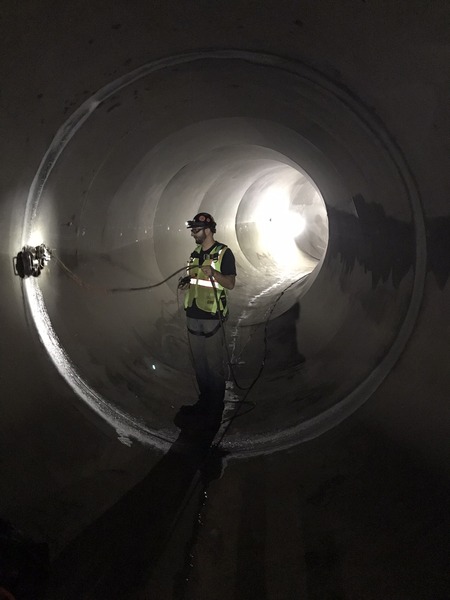
To assure the Gregory B. Jarvis Hydroelectric Generation Station could continue delivering reliable power, our firm performed a thorough condition assessment of the 15′ diameter penstock and recommended measures to correct defects before they threatened safety or output.
The project paired multiple inspection methods to build a complete picture of the structure’s health. LiDAR scanning captured the penstock interior in precise detail, while CT scanning measured the depth of identified defects. A crawler-mounted automated ultrasonic system recorded wall thickness throughout, and targeted weld testing verified the soundness of critical joints. Out-of-roundness of the penstock was evaluated by laser. Visual inspection pinpointed where water was seeping into the penstock. Our team performed those evaluations after NYPA’s contractor removed the existing internal coating. After NYPA’s contractor implemented our recommended short-term corrective measures they then applied a new internal coating that was evaluated by a qualified coatings inspector.
Combining these technologies produced a far more accurate diagnosis than any single method could offer, mapping the location, severity and depth of damages or deficiencies. The work culminated in a comprehensive inspection report documenting current conditions alongside clear, prioritized recommendations for repair; as well as thorough preparation for application of a new internal coating that will protect the penstock for as long as the coating product warranty.
The result equips the plant’s operators with the data they need to plan maintenance confidently, extend the asset’s service life, and continue generating clean energy for the community it serves.