
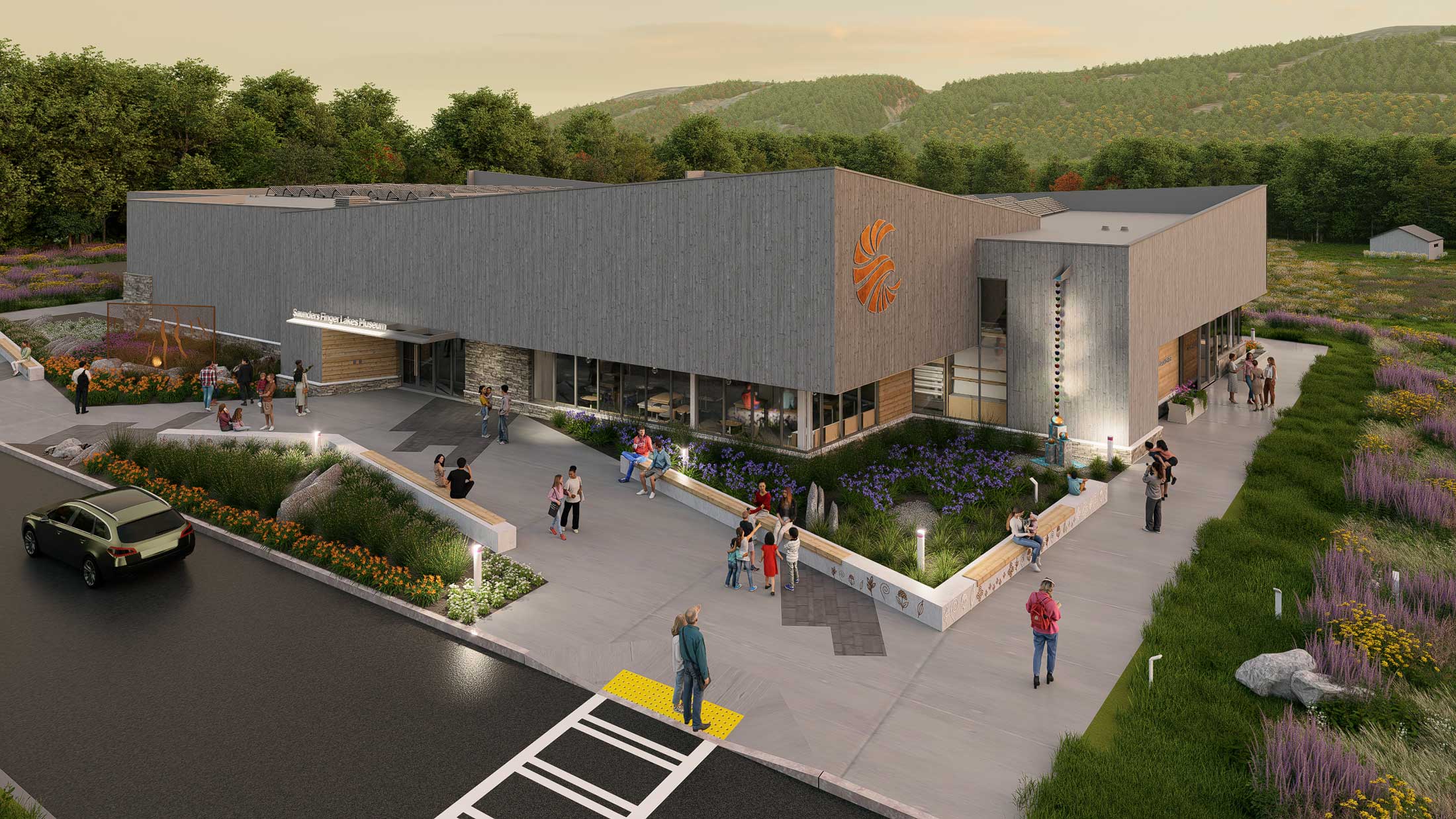
Located in the town of Branchport, New York adjacent to Sugar Creek and Keuka Lake, the Saunders Finger Lakes Museum is known for its beautiful scenic views, interpretive art, and exquisite campus design drawing communities far and wide from across the country. Currently undergoing construction, the newly revitalized museum design seeks to provide visitors with immersive experiences, hoping it will inspire a newfound appreciation for the cultural heritage/ecosystems of the Finger Lakes Region, spark curiosity, action, and further exploration between people, plants, and animals that inhabit the land. Infused with green infrastructure enhancements, climate-conscious designs, and community-centered improvements, this resilient new landscape design of the museum is both a visual representation of the story it aims to tell and the legacy it wishes to leave behind for generations to come.
Transforming the Saunders Finger Lakes Museum
Bringing the Saunders Finger Lakes Museum to life was a collaborative, ongoing project that involved both insiders and outsiders’ expertise to preserve the history and ecology of the region, in addition to providing visitors with immersive, one-of-a-kind experience. To support this initiative, landscape architects at Colliers Engineering & Design coordinated with architects at MRB Group for conceptual exploration of specific showcase and interpretive public art feature opportunities, exhibit designers at Reich & Petch to develop a unified vision for the museum, civil engineers from Passero Associates, and LeChase Construction who provided construction management services. For site design, art opportunities, concept plans, and master planning, landscape architects collaborated with the architecture group members and leadership members in the planning discipline.
To bring this visualization together, landscape architects from Colliers Engineering & Design developed hand-drawn sketches, concept plans, and immersive, high-quality 3D renderings to strategize how they picture the museum to look, feel, and interact with guests during their tour. Using a phase-by-phase approach, team members carefully highlighted different elements of the campus, offering a holistic view of the design to provide the best experience possible for visitors.
Elevating the Environment through Thoughtful Design Processes
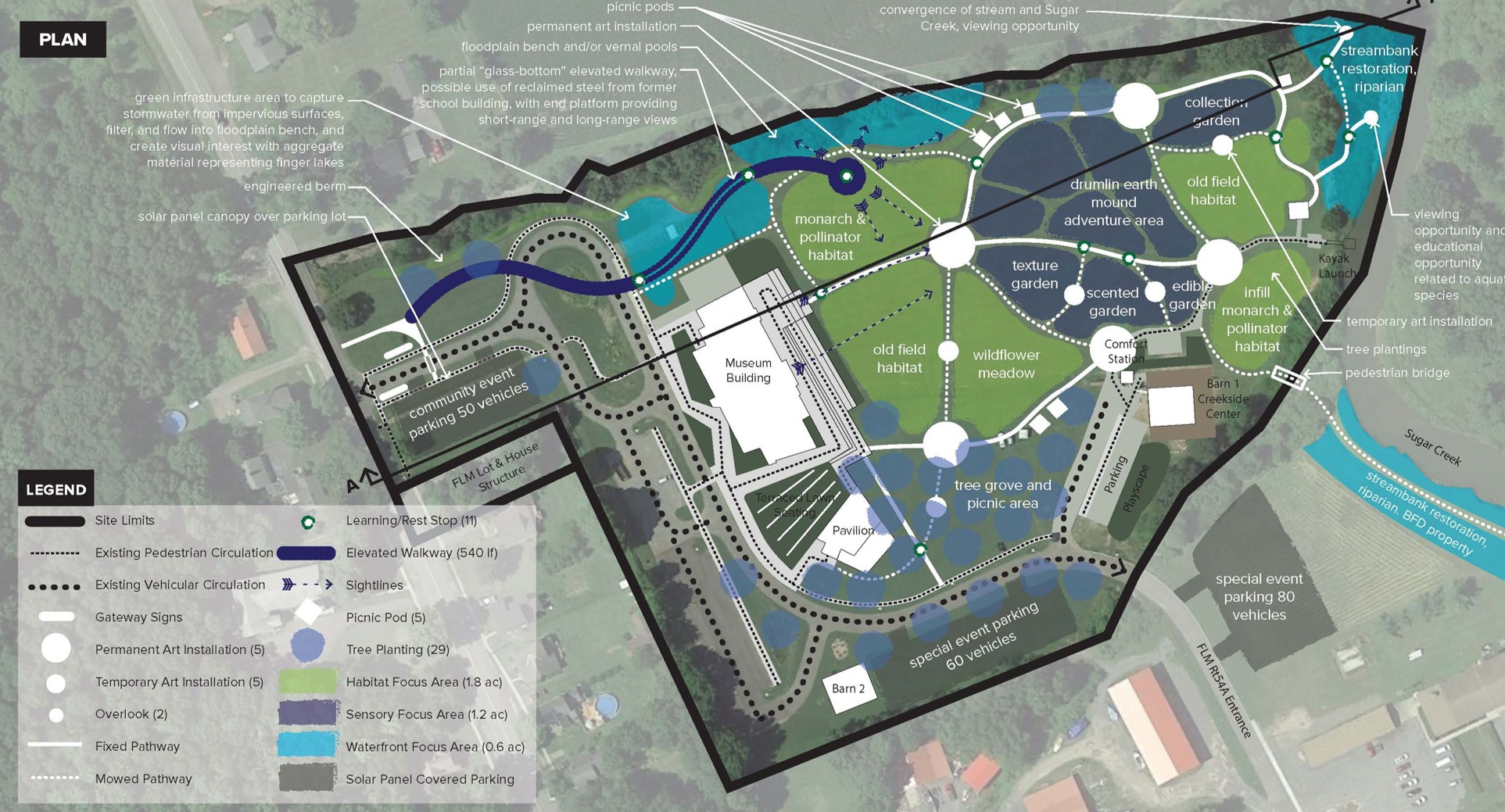
Divided across two phases, each element of design was carefully integrated and woven throughout the environment to connect both the interior exhibit design and the exterior landscape, enabling the design team to create a cohesive educational journey for all visitors from the moment they stepped foot on the landscape to the moment they left the campus. Both inside and outside designs reflect the purpose and intent of the vision of the museum, allowing guests to truly connect with all aspects of the space as they navigate each exhibit.
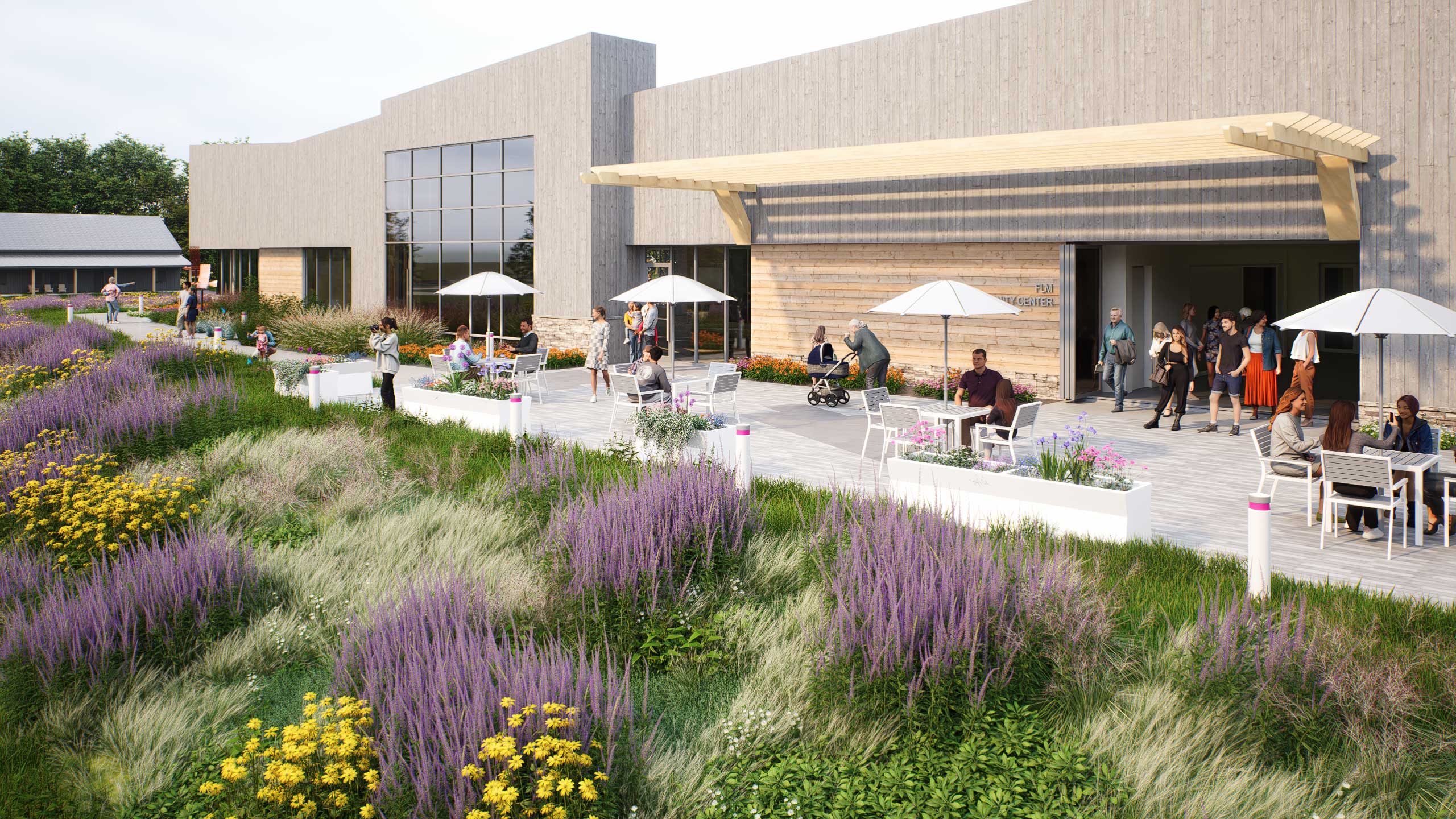
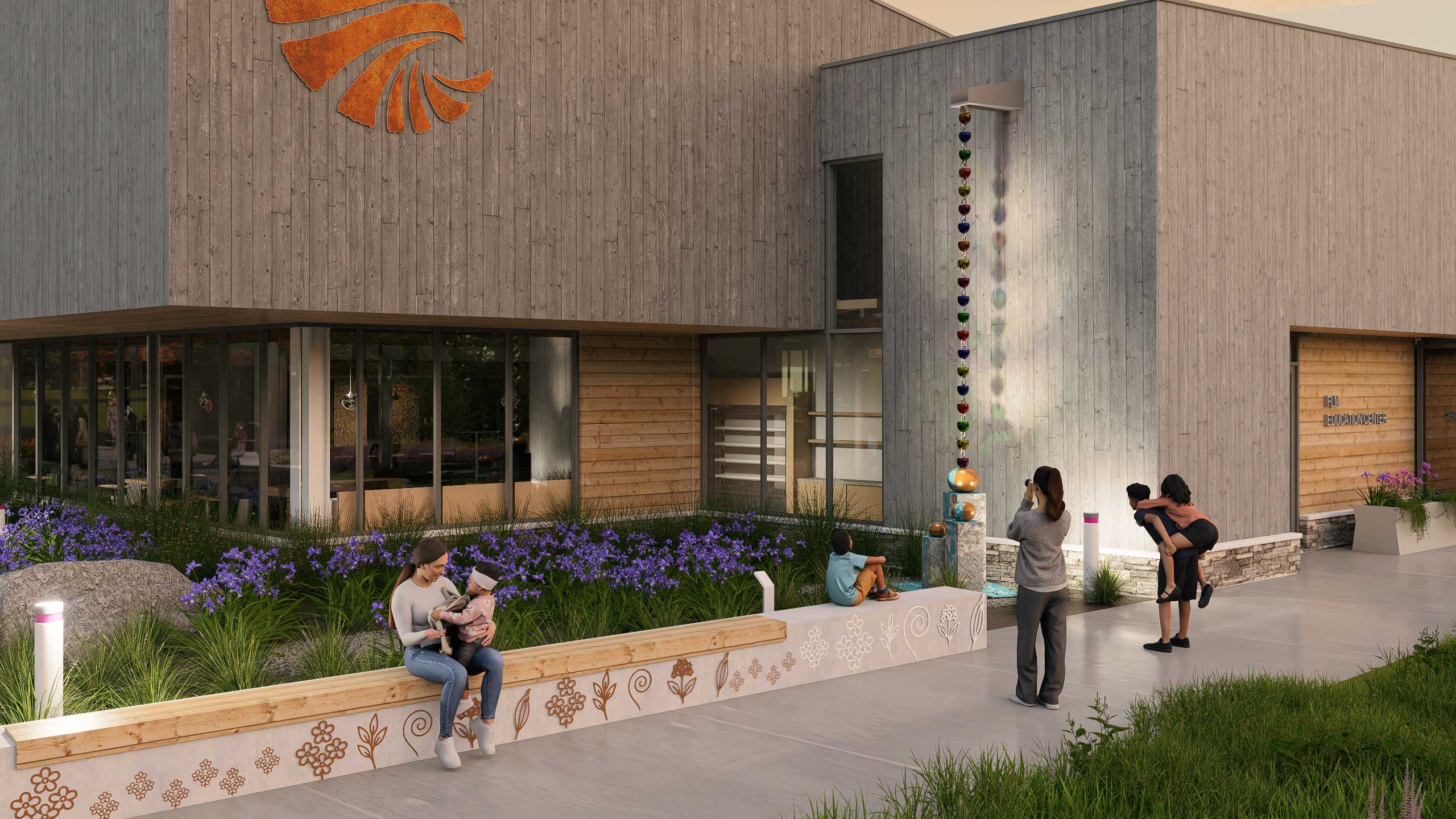
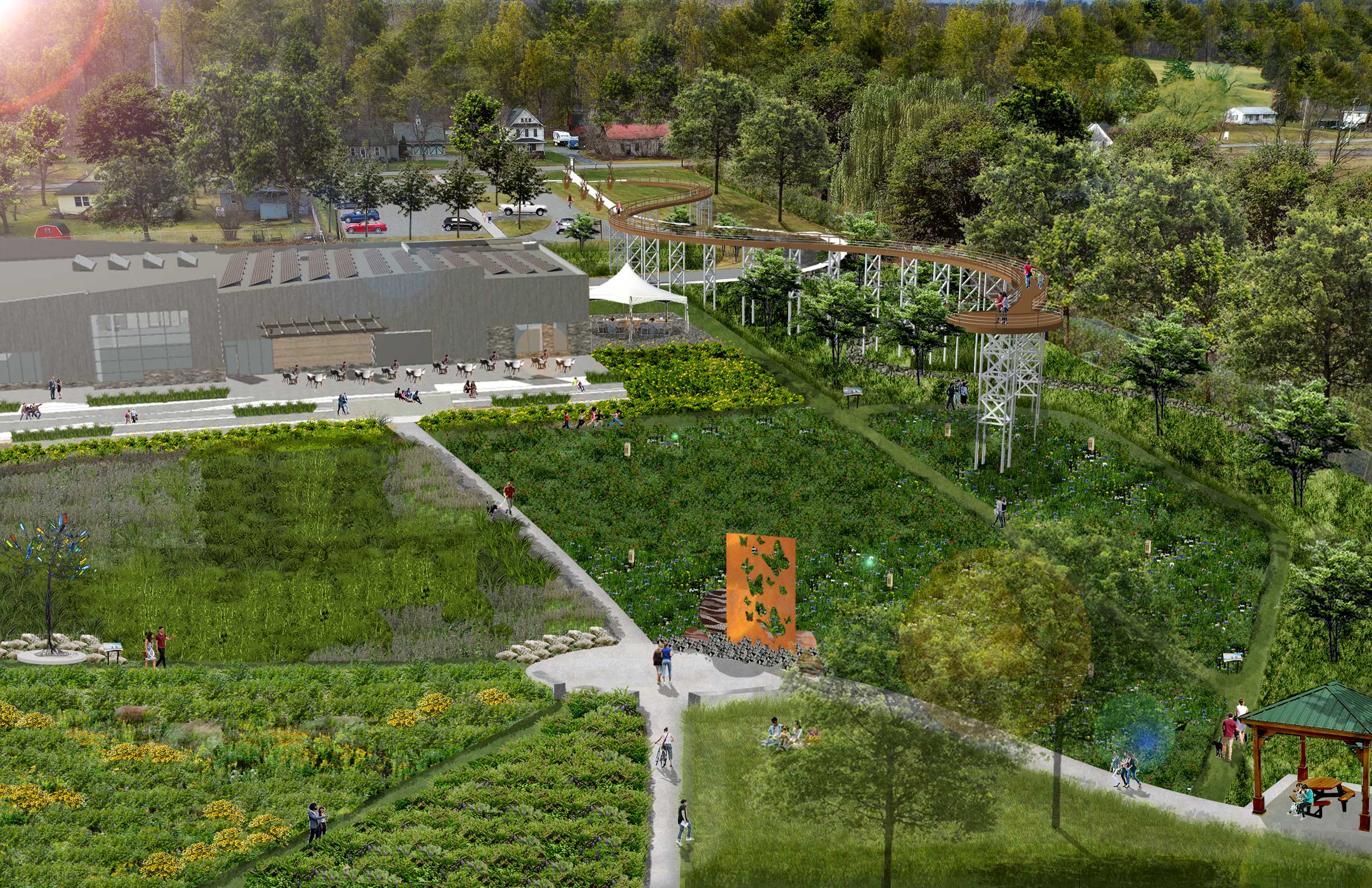
Among the features included in Phase I of the master plan, the perspective renderings show the interface of the building and surrounding landscape, incorporating proper accent lighting, adequate seating areas to accommodate visitors, interpretation for learning about the Finger Lakes Region, native vegetation species for rooftop and stormwater interception, a rain scupper, and potential phasing of shade structures to keep guests cool and comfortable as they enjoy exploring the grounds. Phase II of the museum’s design plan extends to the surrounding campus, integrating inclusiveness and mobility to lead visitors through interpretive artwork nodes, native vegetation areas supporting habitat and pollinators, and formal pathways leading visitors seamlessly from one attraction to the next. Future phasing explores public art features, such as rain scupper art, interpretation of the 11 finger lakes, and seat wall accents, that can provide interpretive and learning opportunities where local artists could be engaged to cultivate the character, regional geology, geography and history of the Finger Lakes Region.
Rich with biodiversity, critical environmental resources, and a surrounding historic community, landscape architects applied context-sensitive solutions to develop a comprehensive master plan to preserve the campus and integrate the surrounding ecology acting as both the subject and medium of the design, and source of inspiration for all to admire. From a small tributary to an old field habitat, to the Sugar Creek and Keuka Lake, many areas were heavily considered to protect the landscape, and species inhabiting the land all while improving safety, mobility, and infrastructure conditions.
Sustainable Designs that Serve a Greater Purpose
Central to the Saunders Finger Lakes Museum transformation is its focus on sustainability in design while highlighting three main themes of ecology, art, and play. Providing guests with new and improved experiences meant taking into consideration climate mitigation, the surrounding communities/environment, and user experiences to ensure all elements of design worked in harmony with one another while visitors enjoyed the amenities of the museum.
Some of the key aspects of this sustainable landscape design include native plantings interwoven throughout the campus in support of wildlife habitats and in celebration of building ecological identity, rooftop solar panels designed to generate on-site renewable energy, a rain garden to capture stormwater runoff from impervious surfaces, and canopy structure built to protect guests from precipitation and other weather conditions. Additionally, interpretative art representing native species was designed using recycled and local materials, a fun and eco-friendly way of bringing the animals to life.
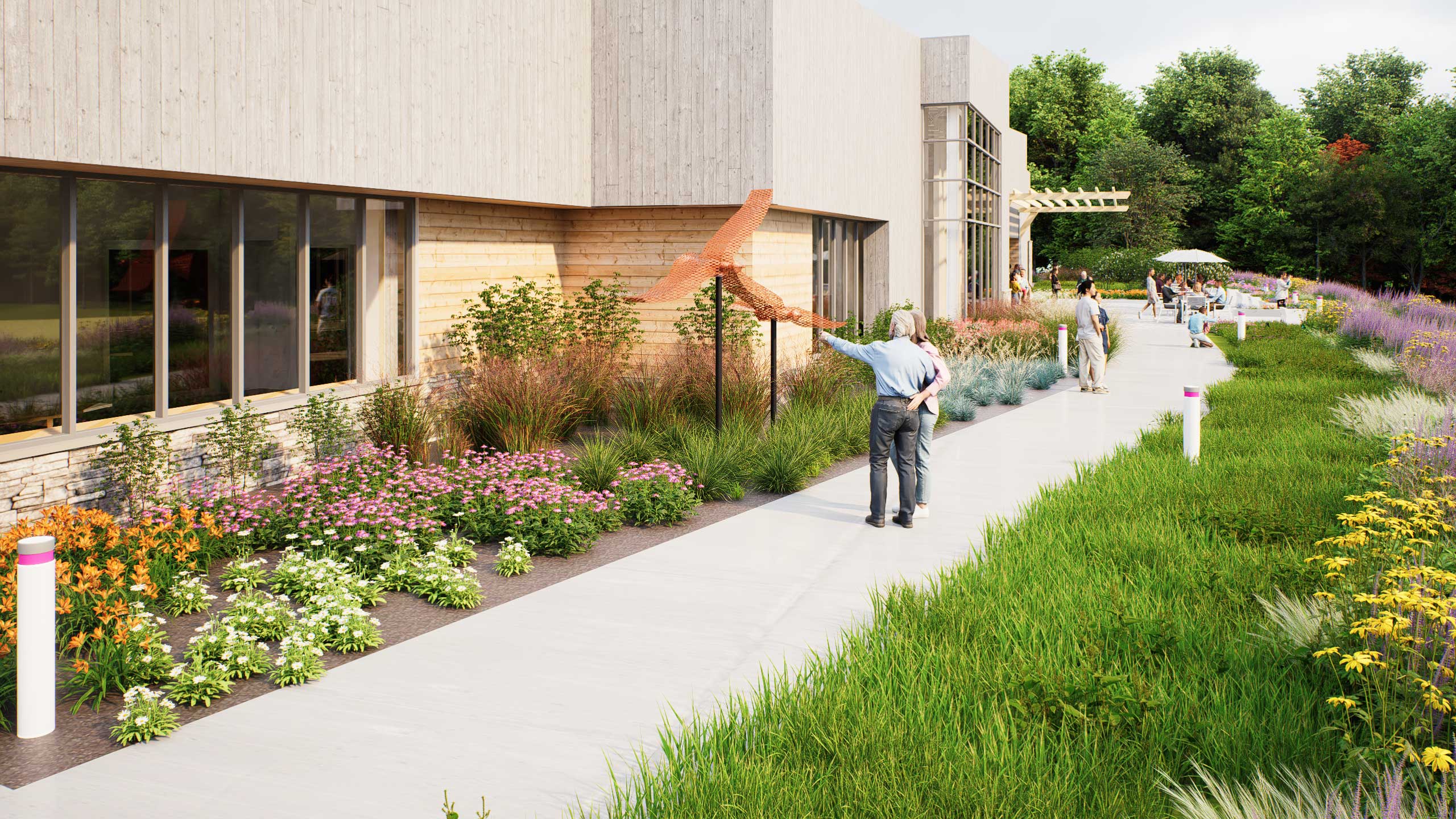
Further, optimizing the landscape design required a deeper understanding of visitors’ needs to determine accessibility routes, ADA ramps, parking, and alternative sidewalks to provide a seamless experience of moving around the campus. These critical design elements play a huge role in elevating guest experiences all while maximizing our use of natural resources, making the Saunders Finger Lakes Museum both a highly functional and sustainable revitalized design.
Find Your Calling at the Saunders Finger Lakes Museum
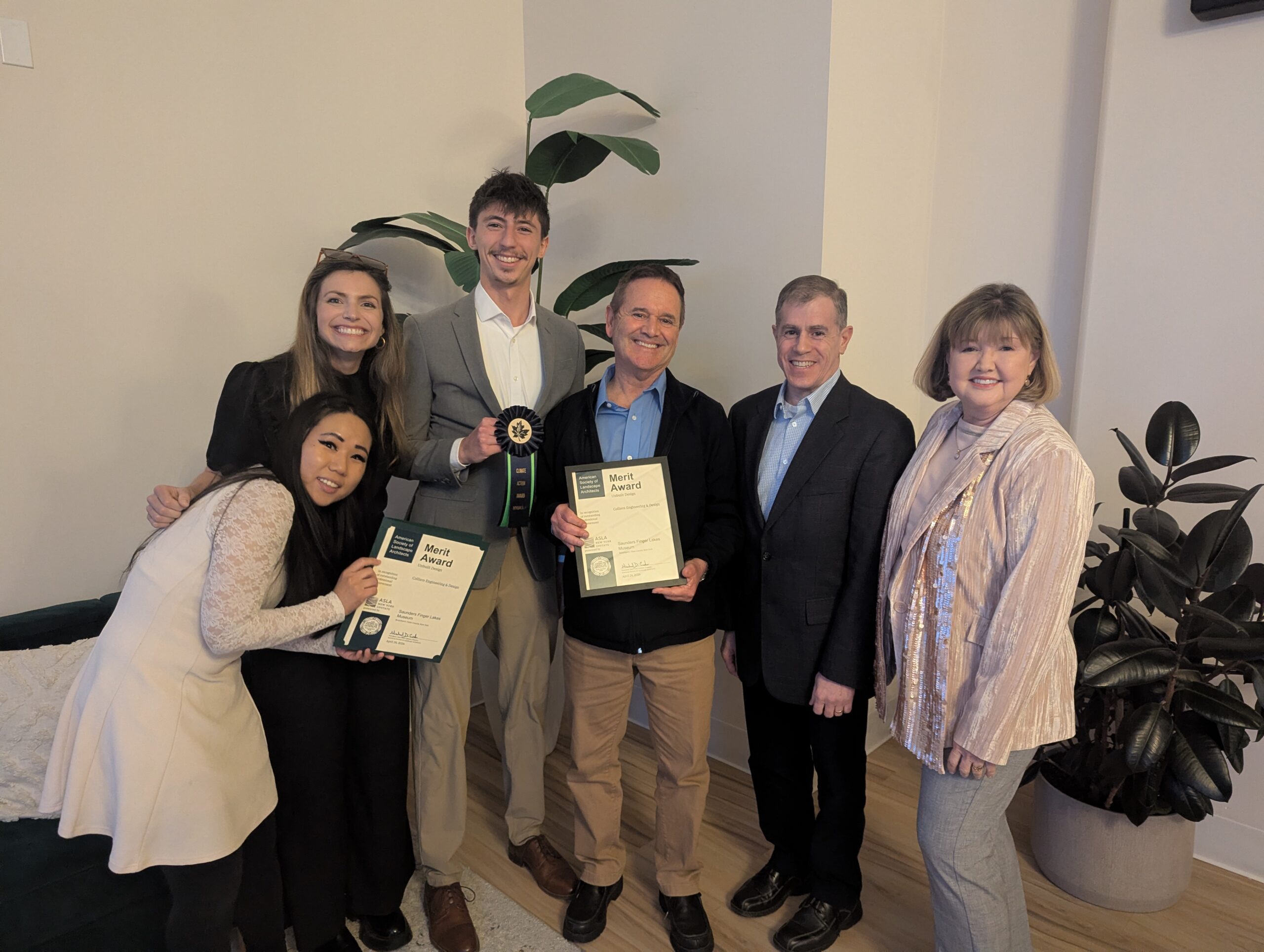
The newly designed Saunders Finger Lakes Museum is an enhanced reflection of the surrounding communities, habitats, and diverse ecology, symbolizing great pride and respect for the Finger Lakes Region. Recognized for its quality of design and communication, clarity of expression, environmental responsibility, functionality, and sustainability, the project has been awarded a Merit Award in the category of Un-built Works (Design), and a Climate Action Green Ribbon at the 2026 New York Upstate ASLA Annual Reception and Awards Celebration.
With this exciting new design underway, there are endless opportunities to get involved, connect with its rich history, and experience art, play, and the environment right alongside family and friends.
Let’s Go Green Together
As we close out the month of April, we encourage you and someone you know to visit Saunders Finger Lakes Museum upon reopening to learn more about its history and diverse ecology. You may also choose to participate in green-related activities that foster environmental stewardship, pushing us one step closer to living in a healthier, more sustainable world by joining The Green Team, where you can help drive community impact. When we act together, it can make a monumental difference in the way we live, interact with one another, protect our environment, and each other.
Partner with Us at Colliers Engineering & Design
Creating spaces and places with purpose takes a team. When you choose Colliers Engineering & Design as your partner, you can rely on our solution-oriented experts to provide you with strategic guidance from project start to finish. No matter what you need, we’re here to support you every step of the way to accelerate your success and bring your vision to life.
Connect with one of our experts today. Click here to learn more.