
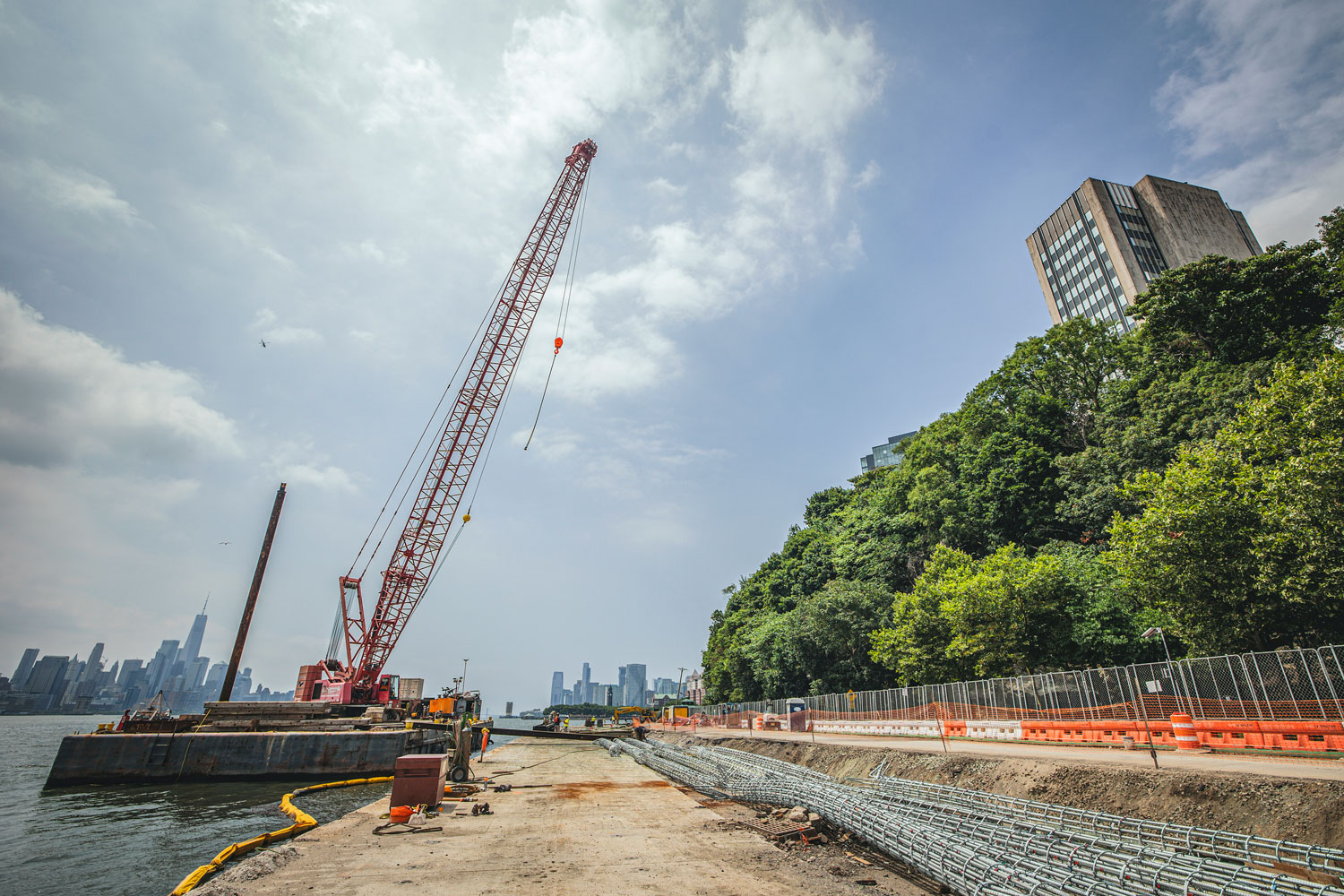
Along Hoboken’s Hudson River waterfront, the Frank Sinatra Drive promenade offers one of the most recognizable views in the region. Residents jog along the shoreline with the Manhattan skyline in the distance, cyclists follow the path north and south through the city, and visitors gather along the water to watch boats pass by or fireworks light up the sky. For many in Hoboken, the Hudson River Walkway is more than a scenic route. It is a daily part of life and a defining feature of the city.
In 2024, that experience was suddenly interrupted when a sinkhole appeared along Frank Sinatra Drive, exposing a hidden problem beneath the waterfront and prompting an urgent effort to stabilize the shoreline.
Working in partnership with the City of Hoboken, Colliers Engineering & Design led the emergency investigation and rehabilitation of approximately 777 linear feet of aging bulkhead along the Hudson River. The project addressed immediate safety concerns while strengthening a critical piece of infrastructure that supports the roadway, the waterfront walkway, and the public spaces above it.
A century-old structure under pressure
The seawall supporting this section of the waterfront dates back to the early 1900s. For decades it quietly performed its role, holding back soil, protecting the shoreline, and supporting the heavily used walkway and platform that sit above the river’s edge.
When the sinkhole formed along Frank Sinatra Drive, it quickly became clear that the issue extended beyond the roadway surface. Engineers investigating the site discovered that deterioration within the existing seawall had allowed voids to develop behind the structure. Erosion at the base of the wall had further weakened the system, creating instability that eventually caused the ground above it to collapse.
What appeared to be a localized failure revealed a much broader challenge beneath the waterfront.
To understand the full extent of the conditions, the project team carried out a detailed technical investigation that examined the site both above and below the waterline. Structural inspections were performed from the surface, while divers assessed the condition of the wall underwater. Ground penetrating radar helped identify hidden voids within the soil behind the wall, and geotechnical borings extended more than forty feet below the riverbed to analyze subsurface conditions. Subsurface utility engineering and survey work also helped identify existing infrastructure that needed to be considered during design and construction.
Together, these efforts provided a comprehensive picture of what had gone wrong and what would be needed to rebuild the shoreline safely.
Engineering a stronger shoreline
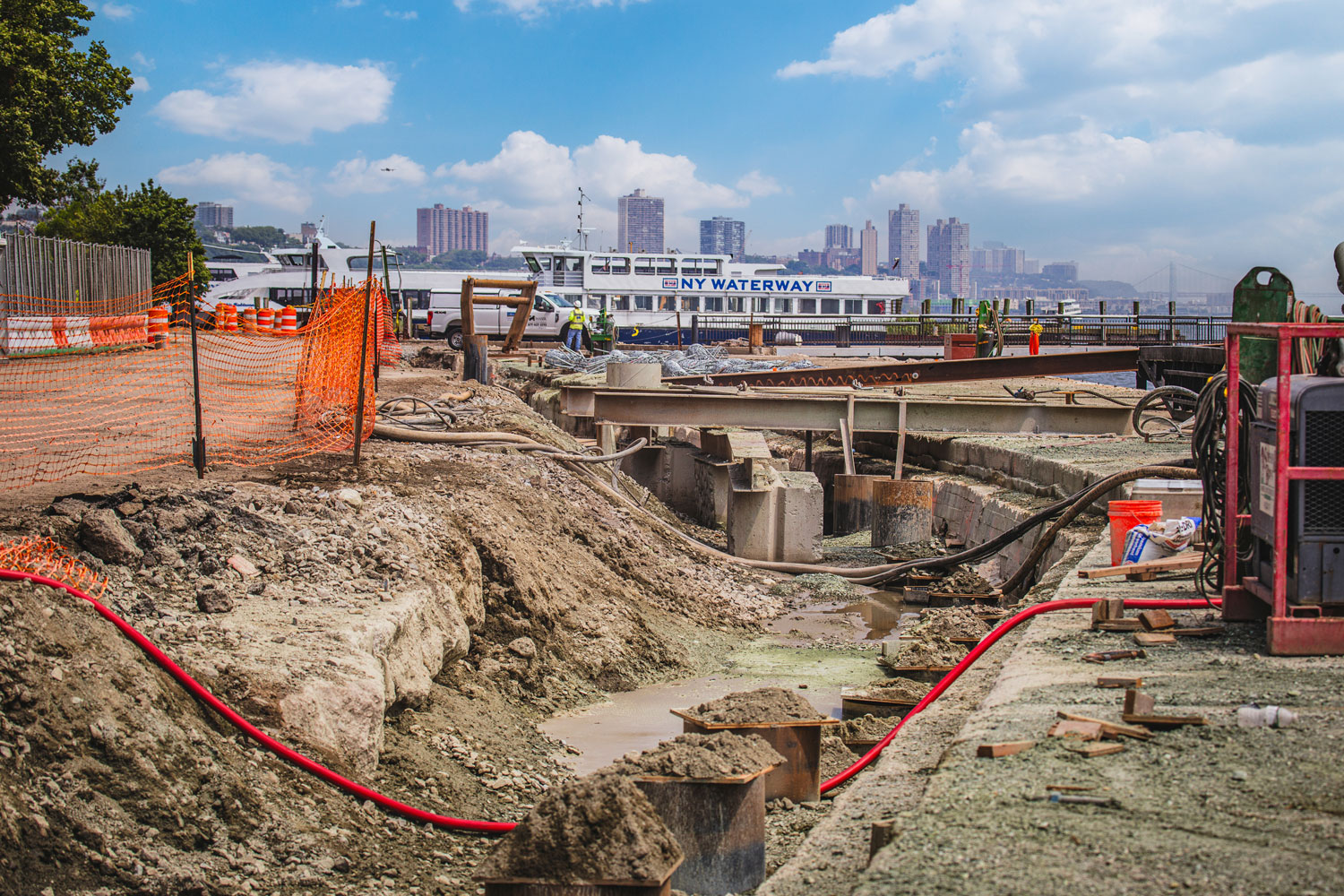
Because bedrock sits relatively close to the surface along this stretch of the Hudson River, engineers determined that the replacement seawall would need to be anchored directly into the rock below in order to provide lasting stability.
The new system was designed as a steel combiwall, combining large steel pipe piles with interlocking sheet piles to create a continuous structural barrier along the shoreline. The pipe piles, often referred to as king piles, measure 24 inches in diameter and were drilled deep into the bedrock beneath the river.
Installing these piles required specialized down-the-hole hammer drilling equipment capable of cutting through dense soil and rock while maintaining precise alignment. Working closely with the project team, construction contractor Simpson & Brown used this technology to install the rock-socketed piles that anchor the new seawall system into the shallow bedrock beneath the Hudson River. By anchoring the structure directly into bedrock, the new wall gains the strength needed to resist soil pressure, tidal forces, and the long-term environmental stresses that affect waterfront infrastructure.
The system is topped with a reinforced concrete cap that supports the platform and walkway above it. Much of this work remains hidden below grade and beneath the waterline, but it forms the structural backbone that ensures the stability of the waterfront corridor.
Rebuilding the waterfront above
While the structural work focused on stabilizing the shoreline, the project also restored the public spaces that make this part of Hoboken so important to residents and visitors.
Beneath the platform area, more than 2,400 square yards of precast concrete planks were installed to rebuild the pedestrian surface along the waterfront. The project also rehabilitated approximately 19,000 square feet of offshore platform and restored more than 3,400 square yards of pavers along the promenade.
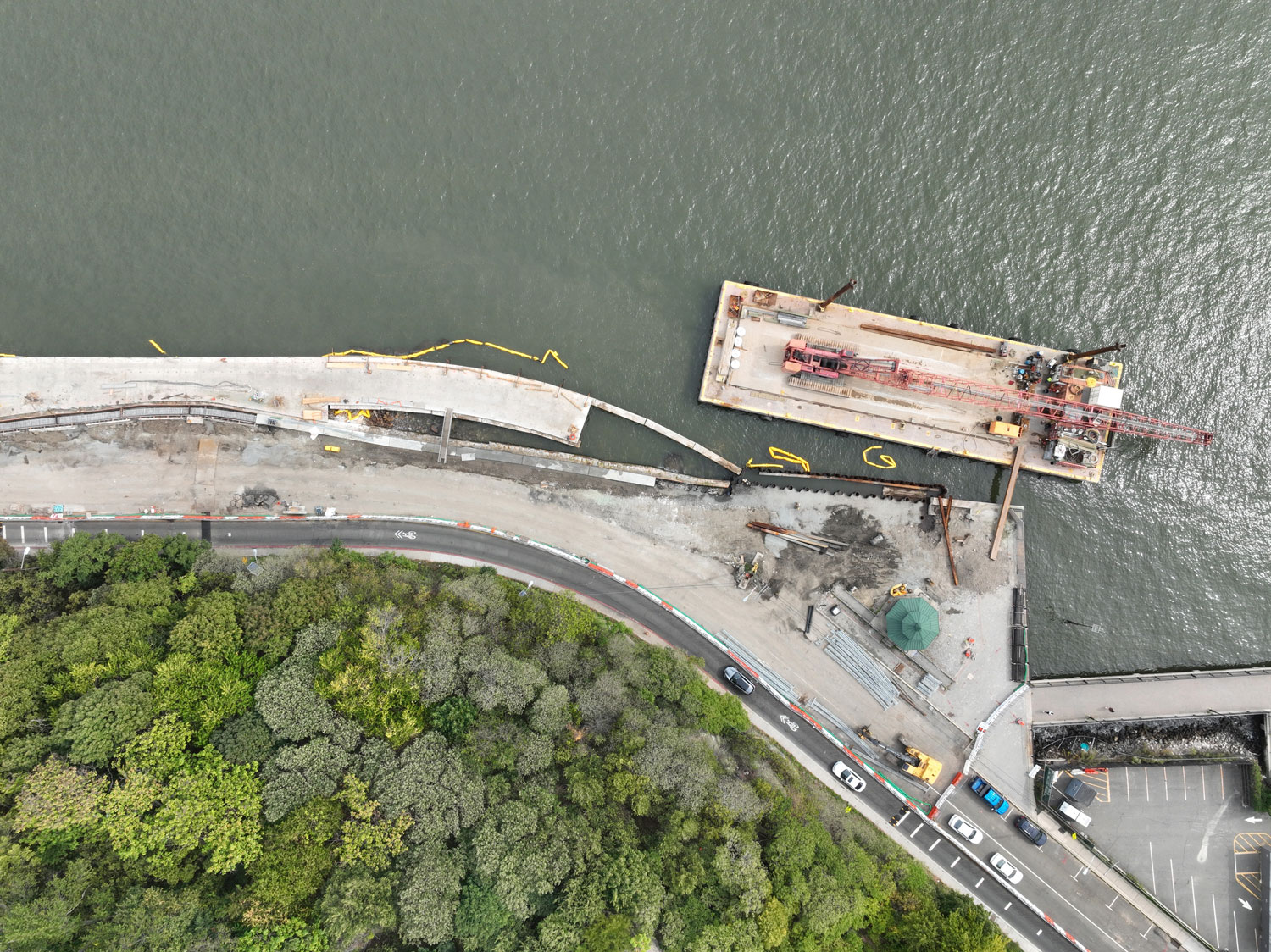
The walkway was regraded to meet current ADA accessibility standards, ensuring that the waterfront remains accessible to everyone who uses it. New lighting was installed with thirty-seven new light poles and foundations, while existing bollard lights at Castle Point Pier were replaced. Benches, railings, water fountains, and other amenities were removed during construction and carefully reinstalled as the site was restored. Additional life safety devices were also added along the walkway to improve public safety.
These improvements ensure that when the area fully reopens, the waterfront will continue to serve as a vibrant gathering place for the community.
A collaborative emergency response
The project moved forward on an accelerated timeline, requiring coordination across multiple technical disciplines. Teams from Colliers Engineering & Design provided structural and geotechnical engineering, environmental permitting, traffic studies and traffic control planning, electrical and plumbing engineering, subsurface utility engineering, and construction engineering and inspection services.
Working closely with the City of Hoboken and Simpson & Brown, the team helped ensure that the work was executed in accordance with the design intent and contract documents while maintaining the project schedule and budget.
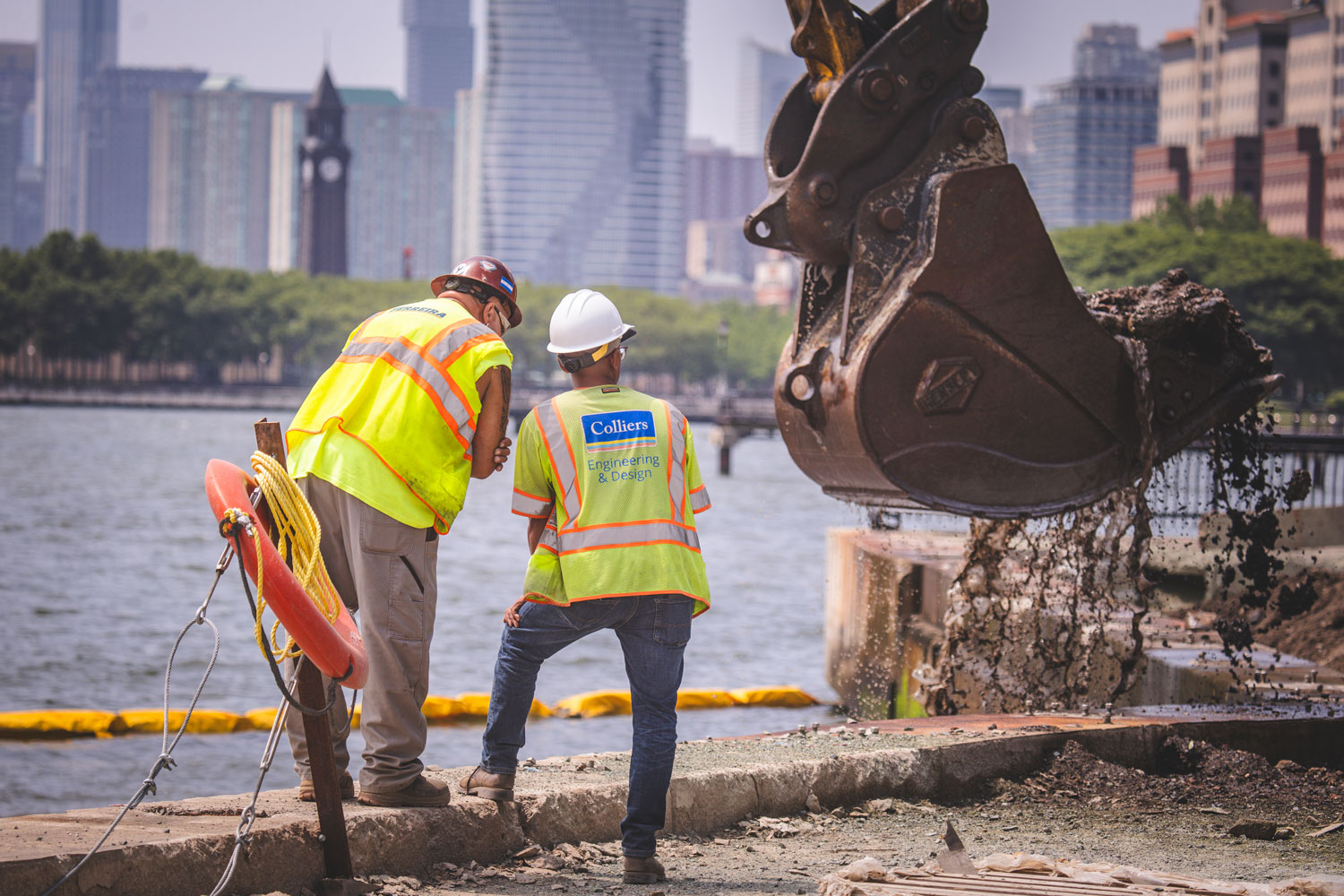
The rapid response also depended on the collaboration between geotechnical, structural, and permitting specialists, the City, and Simpson & Brown to coordinate the design, construction process, and timeline needed to stabilize the site as quickly as possible.
Strengthening the waterfront for generations
Today, much of the new seawall remains out of sight, buried beneath the waterfront promenade and the river’s edge. But its impact is significant.
The rehabilitated bulkhead restores structural integrity to a key segment of Hoboken’s shoreline, protecting the roadway and the Hudson River Walkway while reinforcing the city’s waterfront infrastructure with a system engineered for long-term durability.
For the residents who run along the promenade each morning, gather along the waterfront in the evenings, or visit to take in the sweeping view of Manhattan across the river, the improvements ensure that this iconic stretch of shoreline will remain a safe and welcoming space for years to come.