
Designing Broadband for Everything That Happens After Construction
Somewhere tonight, an excavator bucket is going to strike a buried fiber line no one expected to be there, and a splice crew is going to get a call.
Most people never picture that part. They open a laptop, scroll through their phone or stream a movie, and the connection is simply there. But behind it are handholes beneath roads, cable lashed to poles, drill shots beneath rivers, fiber huts and electronics humming inside locked cabinets.
Kevin Comalander has spent more than 35 years thinking about that hidden world.
“Every network looks good when everything is working,” Comalander said. “You learn what good design really means when something goes wrong at two in the morning.”
More Than a Line to the House
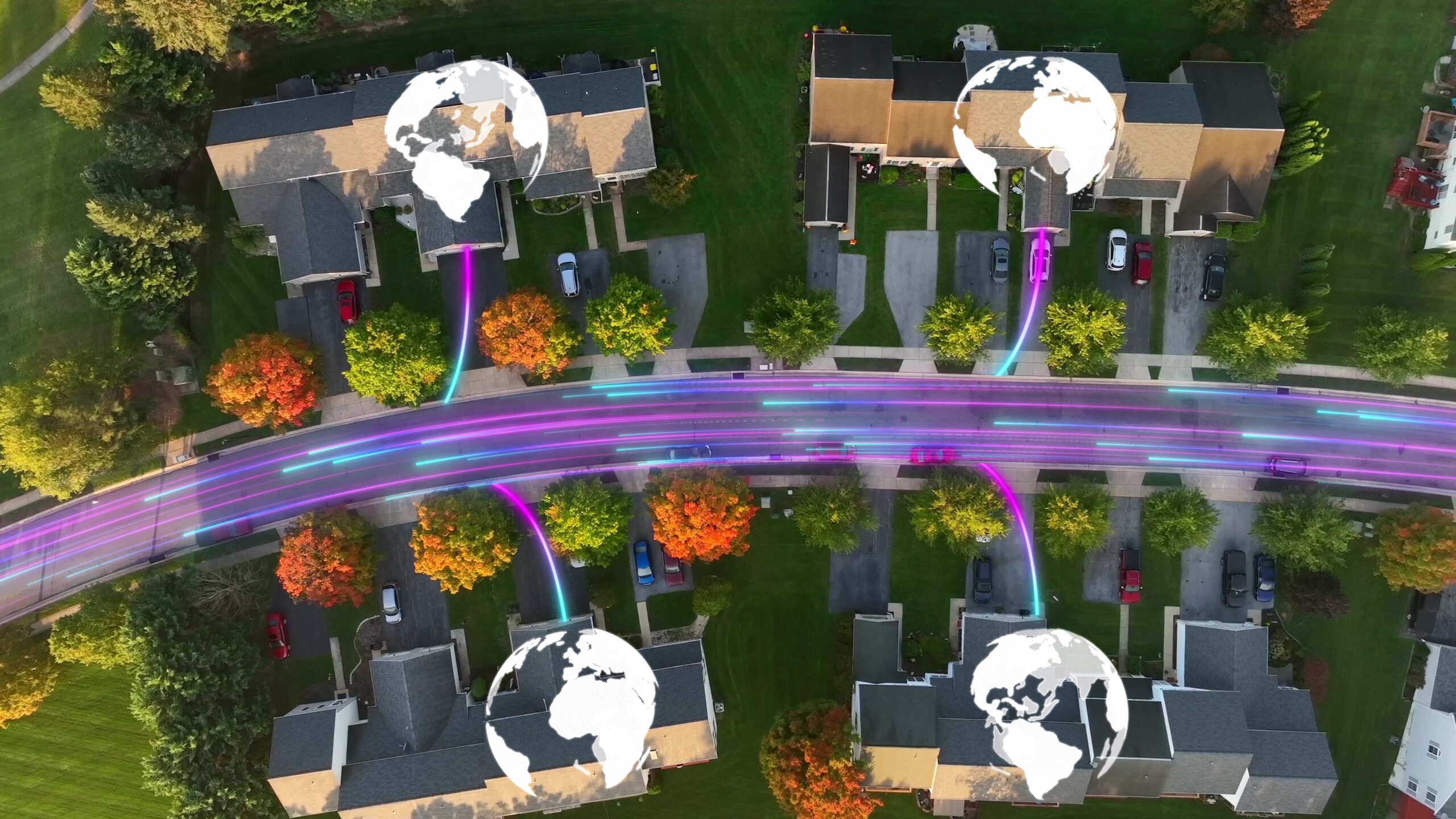
Fiber to the Home, or FTTH, runs fiber directly from a provider’s infrastructure to a home or business. Behind it, backbone routes, distribution networks, facilities, electronics, poles and conduit may serve for decades.
Remote work, cloud services, AI, data centers and connected technologies are driving bandwidth demand, making it essential to serve today’s users without constraining tomorrow’s capacity.
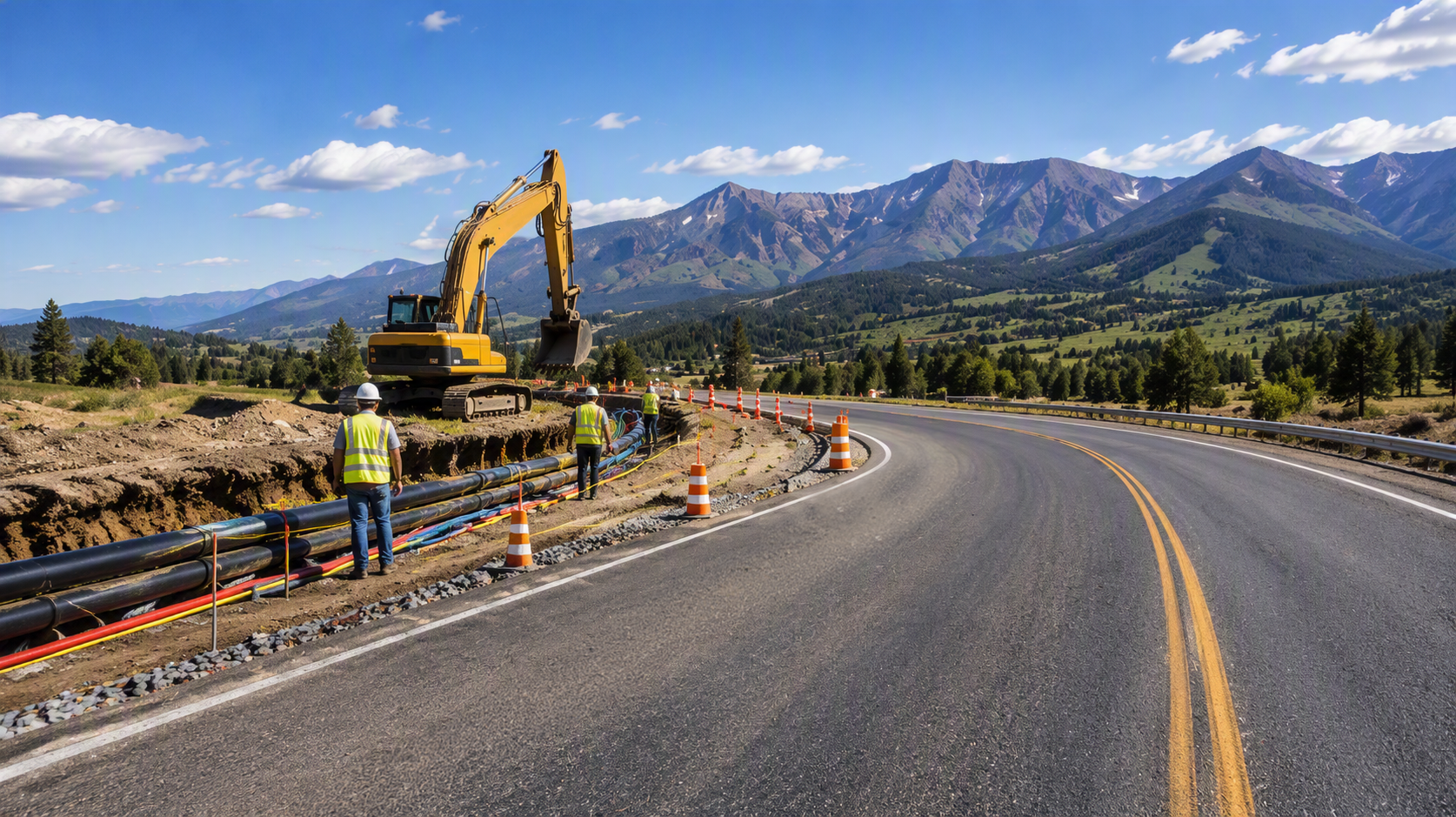
Getting fiber in place is rarely simple. Routes may require pole attachment audits, directional drilling, survey, subsurface utility engineering (SUE), environmental review, right-of-way coordination and permitting.
As Geographic Discipline Leader for Utility Design Engineering, Comalander’s team supports the full lifecycle, from feasibility and network planning to infrastructure design that makes the system buildable, maintainable, and ready to grow.
“Capacity, redundancy, future expansion, maintenance access, operational efficiency and constructability all have to work together,” Comalander said. “The fiber is only one piece. You can design the best fiber in the world, but if you can’t permit it, build it, access or repair it, you haven’t designed a very good network.”
Designing for the Owner
Few projects capture that broader view as completely as Colliers Engineering & Design’s work for one tribal Nation in Arizona.
The Nation’s communities are separated by dozens of miles with limited high-speed infrastructure between them, and it was considering owning and operating the network itself.
For Comalander the question became not simply, How do we connect these communities? but, How do we build a network the Nation can own, operate and rely on?
Comalander’s team developed a concept with backbone rings, fiber huts, central facilities, network electronics and fiber-to-the-home distribution. His operations experience pushed the discussion further: How would crews reach remote sections? If a segment failed, could traffic reroute? Could a technician restore service quickly?
“I’ve spent enough nights fixing fiber to know what I want to see on the drawing,” Comalander said. “If the first time you think about maintenance is when something breaks, you thought about it too late.”
For a Middle -Mile project in North Carolina, the fiber team also supported design and permitting for a 210-mile backbone serving schools, healthcare institutions and other anchor facilities, navigating environmental, historic, cultural, access and constructability considerations.
When the Map Meets the Real World
Before joining Colliers Engineering & Design to design fiber networks, Comalander spent years on the other side of the equation, managing a network that grew to roughly 10,000 miles and dealing firsthand with what happened when it failed.
In one year alone, his team responded to approximately 300 damage incidents representing millions of dollars in losses. Some were familiar, like excavators cutting buried conduit or storms taking down aerial routes. Others were less predictable: fiber damaged from target practice, chewed by squirrels and beavers, stolen or blown down by hurricane winds.
“I’ve seen fiber taken out just about every way you can imagine,” Comalander said. “You’re never going to predict all of it. The trick is making sure one bad day doesn’t become a longer-term disaster for the whole network.”
That experience now informs how he approaches design.
Route diversity, accessible handholes, logical splice locations, clear records and room for future capacity are not just plan-sheet details. They are the things that can make a network easier to restore, maintain and expand when the real world inevitably intervenes.
Know What’s Already There
Prevention starts with knowing what is already in the ground.
811 One-Call coordination, utility locating and SUE identify infrastructure beneath a proposed route. Survey, GIS, utility coordination and accurate as-builts can turn that information into permanent network knowledge.
“The person opening that handhole a decade from now probably wasn’t in the room when we designed it,” Comalander said. “Our job is to make sure they’re not starting from zero.”
The Fiber May Know More Tomorrow
Distributed fiber-optic sensing may allow telecom fiber itself to detect and localize disturbances, giving operators greater visibility into threats and faults.
XGS-PON fiber optic cable is widely used for multi-gigabit broadband, while 50G-PON has been standardized for higher-capacity service and can coexist with earlier PON technologies on the same optical distribution infrastructure.
That allows providers to upgrade electronics without replacing the glass already in the ground.
Designing Without a Crystal Ball
What will an owner need from a network 20 years from now?
“None of us have a crystal ball,” Comalander said. “The goal is to make decisions today that leave room for whatever comes tomorrow. Conduit, available fiber, route diversity, equipment space and access all become options over time. Cheap to build and cheap to own are two very different things. A good network gives the owner choices.”
After 35 years of planning, building, expanding and repairing fiber networks, Comalander knows the first connection is only the beginning.
Once construction crews leave, the network most people never see is still there, carrying traffic, weathering failures and adapting to whatever comes next.
Fiber to the Home describes where the network reaches.
Comalander spends his time thinking about what happens after it gets there.