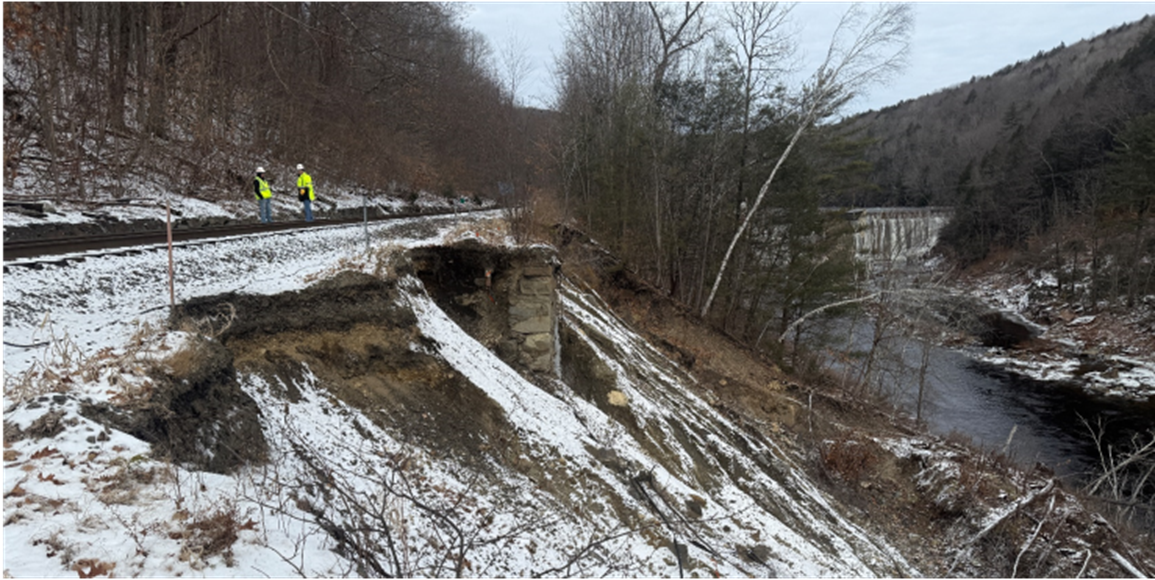
Whether it’s delivering people, products or hazardous materials, rail infrastructure is a big part of what keeps our country moving. When unforeseen acts of nature jeopardize those operations, communities are impacted. In July 2023, severe storms threatened to do just that in the foothills of the Berkshire Highlands of Massachusetts, a region with a vibrant tourism industry rooted in music, arts, and recreation.
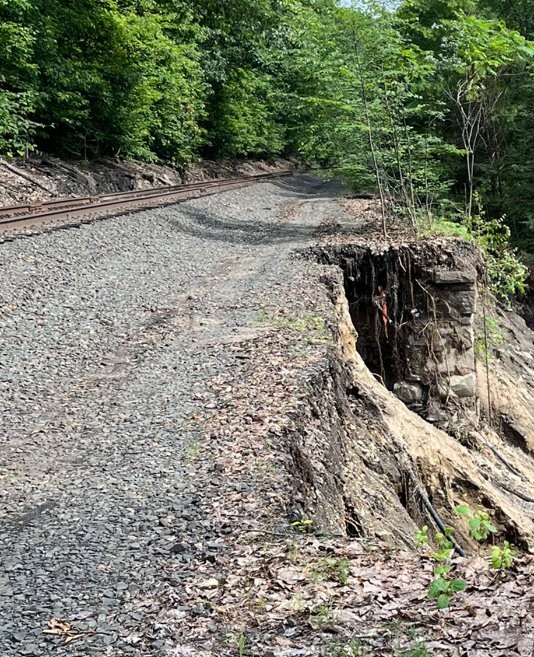
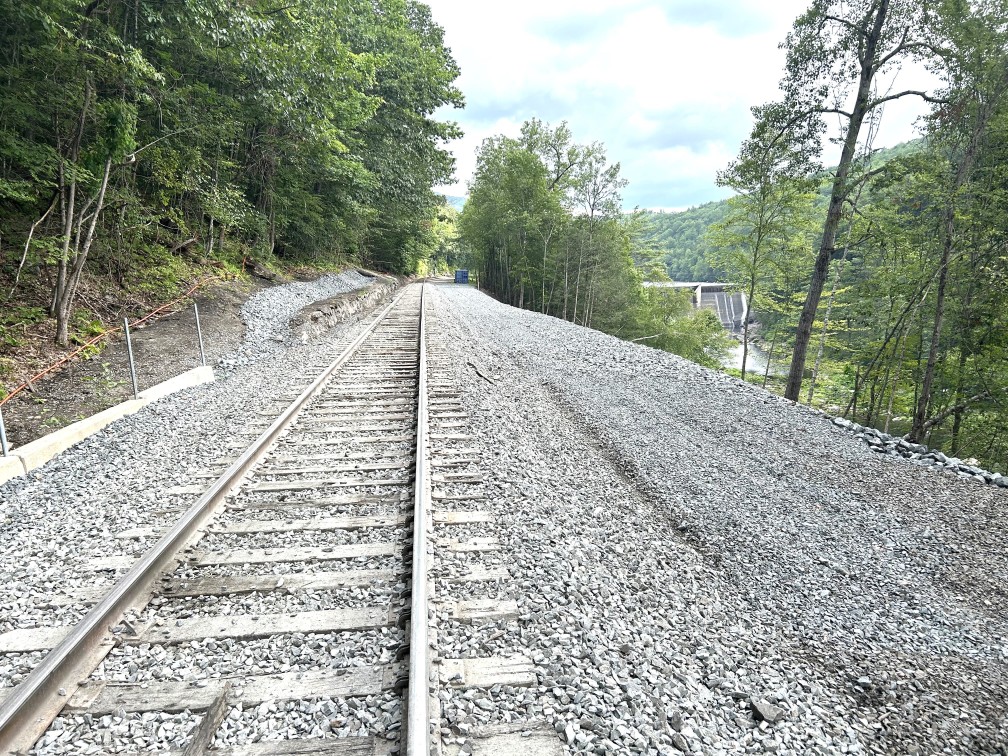
Our client, who operates, manages, and maintains the railroad infrastructure along the highlands route, found slope damage on the tracks caused by the storms, and knew it required both stabilization, and enhanced stormwater runoff management. The site’s proximity to Deerfield River, including the toe of the slope in the river, made this a potentially urgent situation, since hazardous material entering the water would impact the community near the river.
First Steps
Once on the job, our Rail team took a dual approach to their permitting strategy, applying for both standard and emergency certificates, so that they would be prepared if an emergency situation arose. Early engagement and recognizing critical timelines for this process meant our experts were able to move quickly, in light of the risk of river contamination.
Wetland and Watercourse Delineation
Permitting requirements were extensive. Our environmental experts conducted a thorough delineation of wetlands and water courses. The study area included wetlands, streams, and the Deerfield River—all of which were determined to be either definitively or potentially jurisdictional under both federal and state regulations. A detailed delineation report was prepared, including jurisdictional determinations, consultation requirements, permitting considerations, and recommended next steps. A key expert for this work was Allison Robinson, Assistant Project Manager | Environmental Services.
Threatened and Endangered Species Assessment and Regulatory Coordination
A desktop review and preliminary habitat assessment were conducted for federally and state-listed threatened and endangered species using the USFWS IPaC tool and Massachusetts Natural Heritage and Endangered Species Program (NHESP) data. Four species were identified as potentially present within the project area: Tricolored bat, Monarch butterfly, Muskflower, and Mountain Alder.
“Because the area was mapped within state-designated Priority Habitat for Mountain Alder and Muskflower, which are regulated under Massachusetts Endangered Species Act, we conducted a field survey confirming the area was indeed a potential habitat for both,” explained Allison Robinson. “Our team prepared a report summarizing the results of the desktop review and field survey, which they provided for the client alongside guidance on compliance with state and federal regulations, and recommended next steps.”
The environmental team then initiated agency coordination with MassWildlife and requested review of the project. After they oversaw a rare plant survey, they confirmed the absence of the Mountain Alder within the project limits. Subsequently, our experts prepared and submitted a MESA Project Review Checklist to NHESP and secured a formal determination that the project would not result in a “Take” under the Massachusetts Endangered Species Act.
Cultural Resources Due Diligence
“After conducting due diligence efforts to ensure compliance with state and federal regulations that protect cultural resources, we requested a Project Review from Massachusetts Historical Commission who confirmed that the project was unlikely to affect significant historic or archeological resources,” added Allison Robinson.
Optimized Permitting Process
Given the slope’s instability and risk of failure, our team also initiated early consultation with USACE and MassDEP. They also organized a pre-application meeting to discuss the urgency of the situation, where an expedited review of the project was granted by both agencies. Allison Robinson coordinated and attended a site visit with representatives from both organizations, who agreed that the project qualified for an emergency certification and, if necessary, a streamlined federal review.
“To minimize regulatory delays, our experts advised on design modifications and construction staking that successfully avoided impacts to federally jurisdictional waters,” explained Simar Sidhu. “This eliminated the need for additional authorizations from USACE.” These strategic adjustments were critical to reducing the timeline between project permitting and construction. Our team prepared and submitted a complete permit application package to MassDEP, which was approved within 24 hours of submittal. Emergency Certification for the project was successfully obtained, as well as a subsequent extension. This was critical to ensure the project could proceed without delay, while maintaining compliance with environmental laws.
Adaptive Design
Material procurement can often take significant amounts of time. Instead of implementing a standard design, our team directly coordinated with the contractor, the railroad and their preferred contractor, and then with a local query. To work on an accelerated timeline, our team had to think outside the box.
“Standard systems and materials take a long time to install. Based on our knowledge of railroad operations, we knew that wasn’t feasible. That would have taken too long a time, and might have been cost prohibitive,” explained Simar Sidhu, Engineering Designer III. “So, our designers modified the project to be able to use locally sourced blast rock instead of standard materials, while still ensuring stability and quality.”
What is blast rock?
“They drill the holes, they put in the dynamite, they blast it, they scoop it in a truck and sell it as is,” described Lucas Brewer, National Market Lead | Rail. “You don’t crush it, you don’t screen it, you don’t process it. You blow it up to about the size you want, and you use it as is. It is so much quicker, cheaper, and easier to work with.”
“Additionally, loading it directly into a rail car to deliver it to the site means you don’t have to worry about weight limits on highways, or what kind of truck you’re moving it in. You’ve simplified it,” explained Simar Sidhu.
Focused On Safety
Our firm never sacrifices safety for the sake of speed. The site specific safety plan included classroom and field training, and on side dump operation and maintenance. Additionally, the site storage container was equipped with extra personal protective equipment (PPE), water, and repair parts/materials.
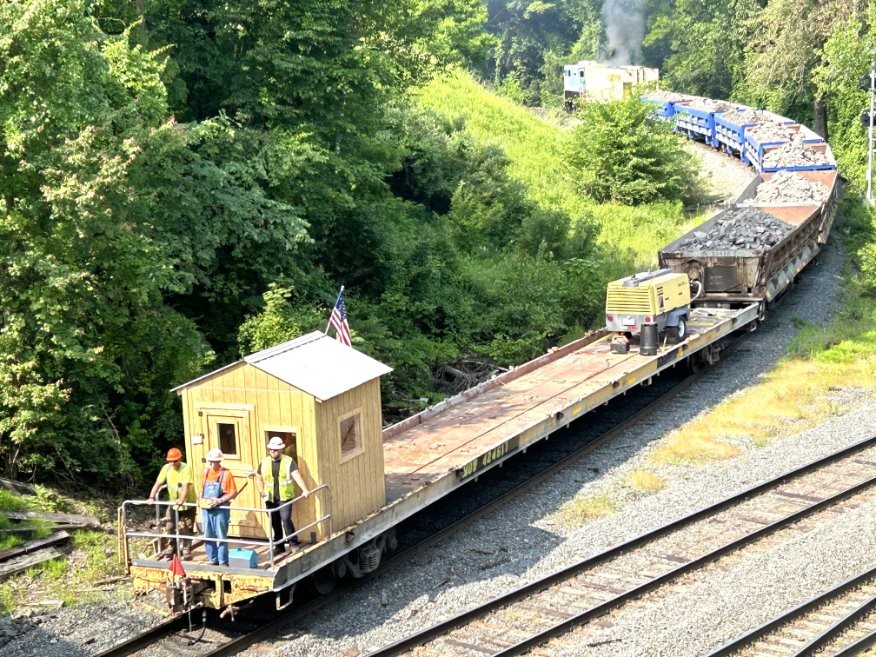
“The flat car used to transport the blast rock was customized for the shoving platform to include a caboose. Essentially a flatbed on rails, our team added a homemade shed to the flat car to keep the employee protecting the rail cars out of the elements and strapped in to prevent them from falling,” Simar Sidhu said. This was essential, since they would drive to the quarry with the locomotive in the front, load it with all the rock, and then they push it backwards the entire distance to the site.
Working Together
With streamlined environmental permitting, tight railroad–consultant–contractor coordination, and the strategic use of higher-quality shot rock, we cut timelines and boosted resilience without sacrificing compliance or performance.
What made this project stand out was the seamless coordination across disciplines. From Survey, Geotechnical, and Rail Design, our teams demonstrated the advantages of offering such comprehensive services. This especially proved useful to arrange accelerated design delivery, as the permitting team directly coordinated with the survey and design teams. Incredibly, we delivered the design 6 weeks before the deadline, and the construction phase, from starting the prep work to the finish surfacing, was completed in less than two months. The original estimate was cut by more than half through our team’s adaptive design measures.
After completion,this project was selected by Railway Track & Structures magazine as a 2026 Top Project and highlighted in their June 2026 edition of their publication. Find it here.