Rail Engineering
How our rail and transit engineering services move people and freight forward
The rail systems that move people and freight across the country depend on engineering that is precise, coordinated, and built around the realities of an operating environment where downtime is not an option. Getting that work right requires deep knowledge of the rail industry, the technical capability to address complex infrastructure challenges, and an understanding of the operational demands that make rail projects unlike any other.
We work with Class 1 railroads, short lines, transit agencies, departments of transportation, and industrial clients to deliver rail planning, design, and engineering services from preliminary feasibility through final design and construction inspection. Our expertise spans rail freight, intercity passenger rail, commuter rail, light rail, bus transit, para-transit, and industrial installations — giving clients a single, experienced partner across every mode and project phase.
- Construction Engineering & Inspection
- Freight & Passenger Rail Engineering
- Industrial Development
- Maintenance Planning & Program Development
- Operations Planning & Analysis
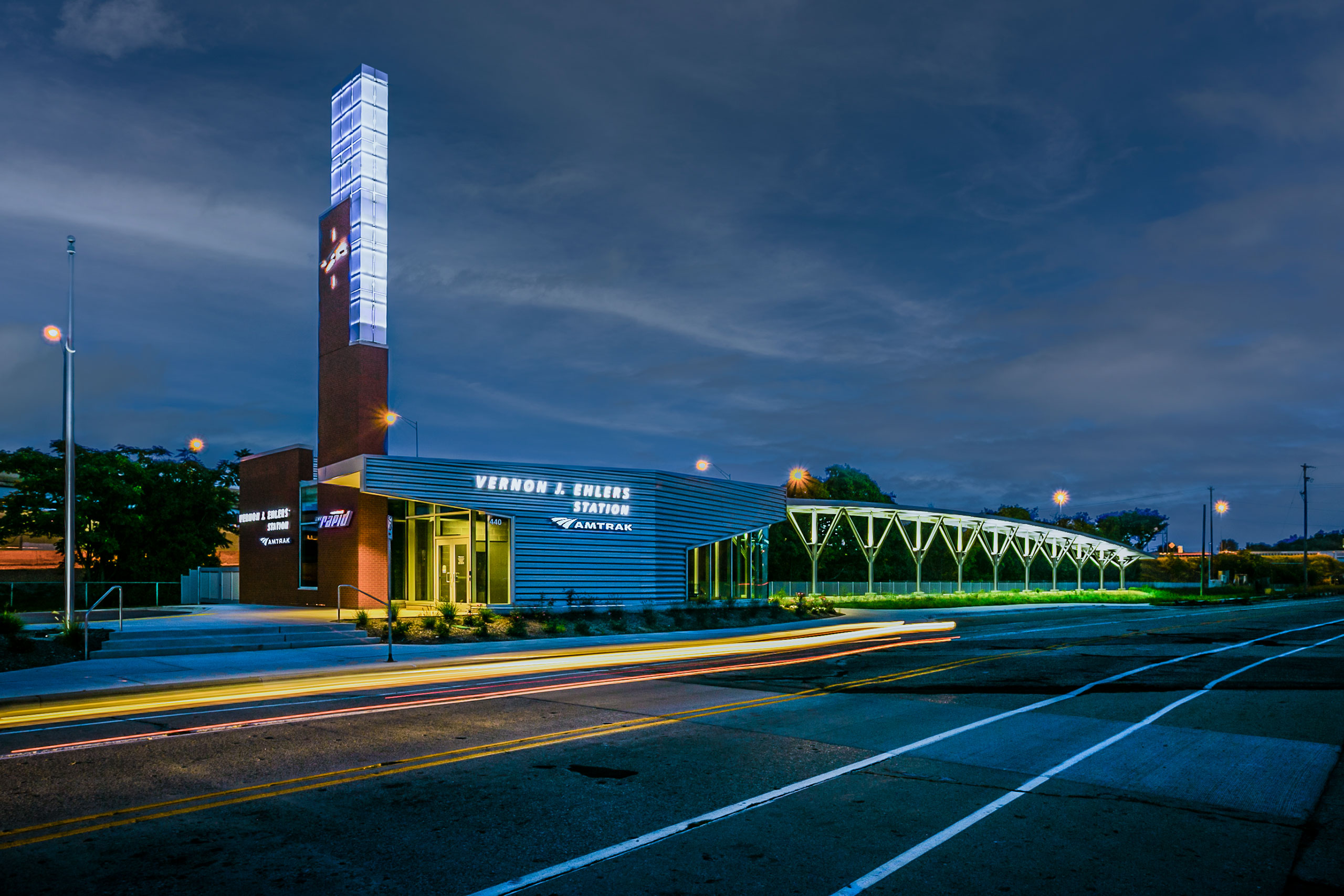
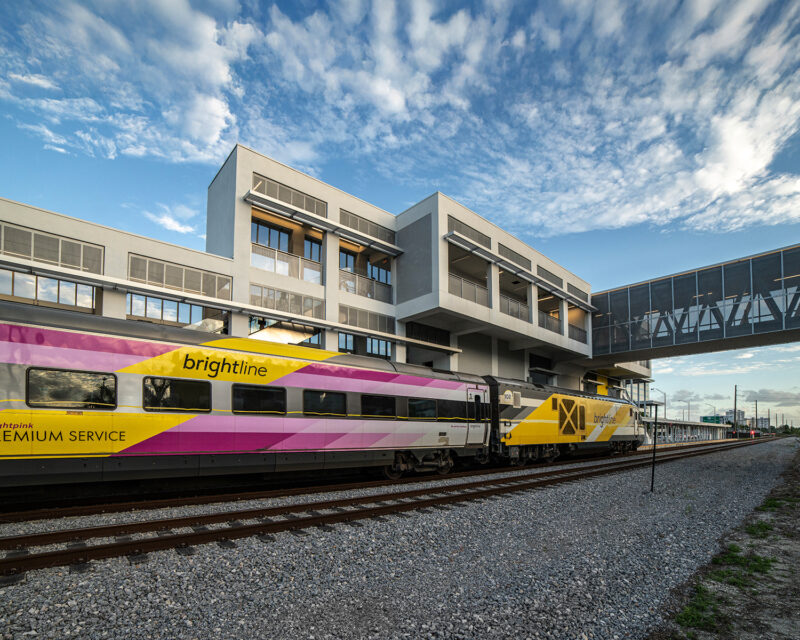
- Stations & Facilities Design
- Track & Facilities Inspections
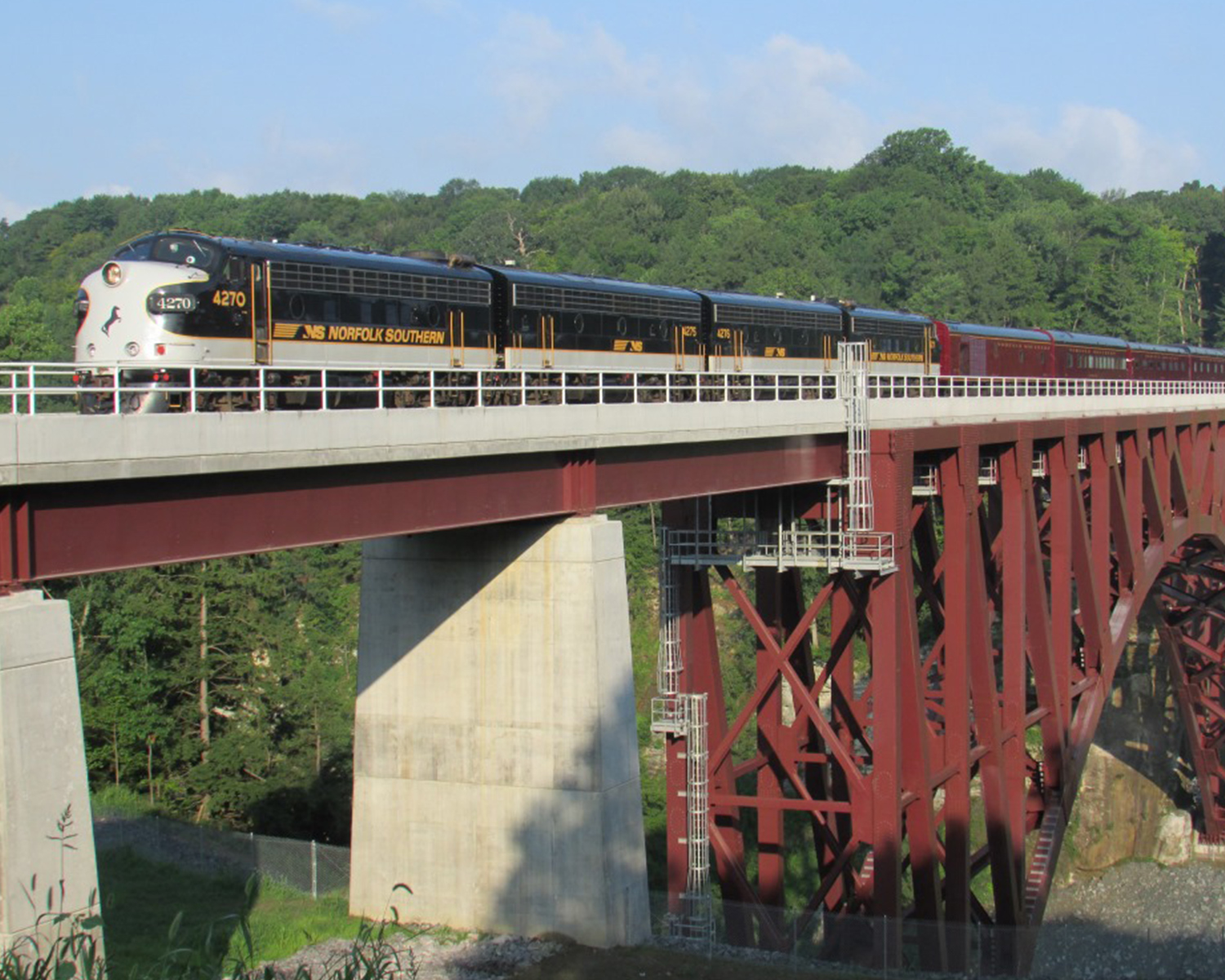
- Track & Roadbed Design
- Track-based Measurement & Mapping
- Yard & Freight Terminal Design
Our approach
Rail infrastructure operates under unique constraints. Service interruptions carry real consequences for freight schedules, commuter reliability, and public confidence. Our team approaches every engagement with that reality in mind, structuring work to maintain uninterrupted rail service and safety while delivering the engineering solutions our clients need.
That commitment extends across the full lifecycle of rail infrastructure. We provide track and roadbed design for new construction and rehabilitation, yard and freight terminal layout, station and facilities design, overhead catenary and contact system engineering, and maintenance planning and program development. Our construction engineering and inspection services carry projects through to closeout, and our operations planning and analysis work helps clients evaluate capacity, identify bottlenecks, and make informed investment decisions about their networks.
Where precision engineering meets operational reality
Rail projects demand a level of accuracy and coordination that leaves little room for error. Whether designing new track alignments, engineering a yard expansion, or supporting active construction on a live corridor, the quality of engineering directly affects the safety and performance of the systems people and goods rely on every day. Our professionals bring design capability across freight, commuter, light rail, and high-speed rail environments, handling everything from horizontal and vertical alignment design to direct fixation track construction, short and long chord verification, and platform clearance analysis. That technical depth — paired with field teams who hold OSHA, TWIC, SWAC, and e-RAILSAFE certifications — means we can deliver in the most demanding and security-sensitive rail environments in the country.
Advanced rail and tunnel measurement
Our rail survey professionals deploy the Amberg Rail Trolley System to measure physical track features including running gauge and super elevation, while capturing horizontal and vertical track alignment data in real time. The Amberg system also supports real-time clearance surveys, overhead catenary and contact system measurement, tamping reports and tamper feeds, and on-site platform clearance verification — all performed while promoting uninterrupted rail service.
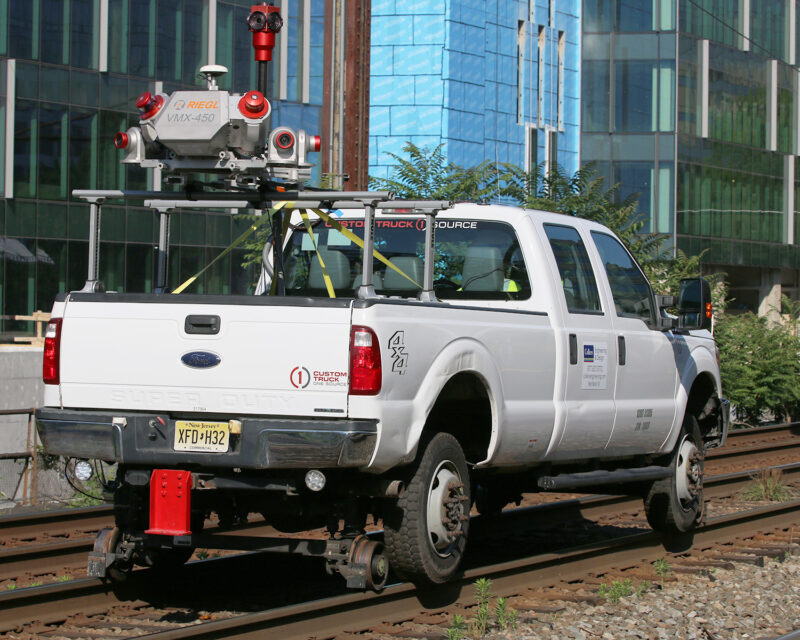
For longer corridors, our Riegl Mobile LiDAR unit mounts on a high-rail vehicle to collect continuous spatial data along the full length of a rail line. When fused with Amberg data, this produces a comprehensive view of rail corridors, cross-sections, tunnels, and physical track features at any client-requested location — including data positioning in non-daylighting tunnels. Amberg survey data also integrates seamlessly with static LiDAR, GPS, and other conventional collection methods such as base mapping, right-of-way corridor mapping, GIS asset mapping, station as-builts, and construction layout, giving clients a complete and highly accurate picture of existing conditions to drive design and construction decisions.
Frequently asked questions
We work with Class 1 railroads, short lines, transit agencies, departments of transportation, and industrial clients. Our expertise spans rail freight, intercity passenger rail, commuter rail, light rail, bus transit, para-transit, and industrial installations, which means we can support projects across virtually every mode and operating environment in the industry.
Minimizing service disruption is central to how we plan and execute every engagement. Our team structures work sequences, phases construction activities, and coordinates closely with operations staff to keep trains running safely while engineering work is underway. Our field teams hold OSHA, TWIC, SWAC, and e-RAILSAFE certifications, which allows us to operate in the most security-sensitive rail environments in the country.
The Amberg system is a track-mounted measurement platform that captures running gauge, super elevation, and horizontal and vertical alignment data in real time, all while rail service continues uninterrupted. It also supports clearance surveys, overhead catenary measurement, tamping reports, and platform clearance verification. When combined with our Riegl Mobile LiDAR unit, it produces a highly detailed picture of corridor conditions that drives smarter design and construction decisions.
Yes. Our Riegl Mobile LiDAR unit mounts on a high-rail vehicle and collects continuous spatial data along the full length of a rail line, including data positioning in non-daylighting tunnels. When fused with Amberg trolley data and integrated with static LiDAR and GPS, this gives clients a comprehensive view of tunnel geometry, cross-sections, and physical track features at any requested location.
We do. Our services cover track and roadbed design for both new construction and rehabilitation, as well as yard and freight terminal layout, station and facilities design, overhead catenary and contact system engineering, and maintenance planning. Whether a client is building new or extending the life of existing infrastructure, we bring the same level of technical rigor and operational awareness to the work.
Our operations planning and analysis services help clients evaluate network capacity, identify bottlenecks, and model the impact of proposed changes before committing capital. That analytical work gives railroad owners and transit agencies the data they need to prioritize investments, allocate resources, and make decisions that improve performance across their networks rather than just addressing one problem at a time.
Let’s talk about your next project!
Our multidisciplinary approach to design, combined with a deep understanding of the industry and passion for innovation, has positioned us as leaders consistently delivering outstanding results in shaping the built environment.