South Lake Dam: Emergency Response Where There Are No Roads
Some dam emergencies happen where help can get there in minutes. This one required a 2.5-mile hike along a snowmobile trail or a boat across the lake. South Lake Dam is a 30-foot-high, 440-foot-long high-hazard earth dam constructed in the mid-19th century, located at a remote site with no electricity and no cellular service. When a major flood event triggered increased seepage near the low-level outlet, NYSCC staff needed a team that already knew the structure. Because we had conducted prior inspections at the site, we were the call they made.
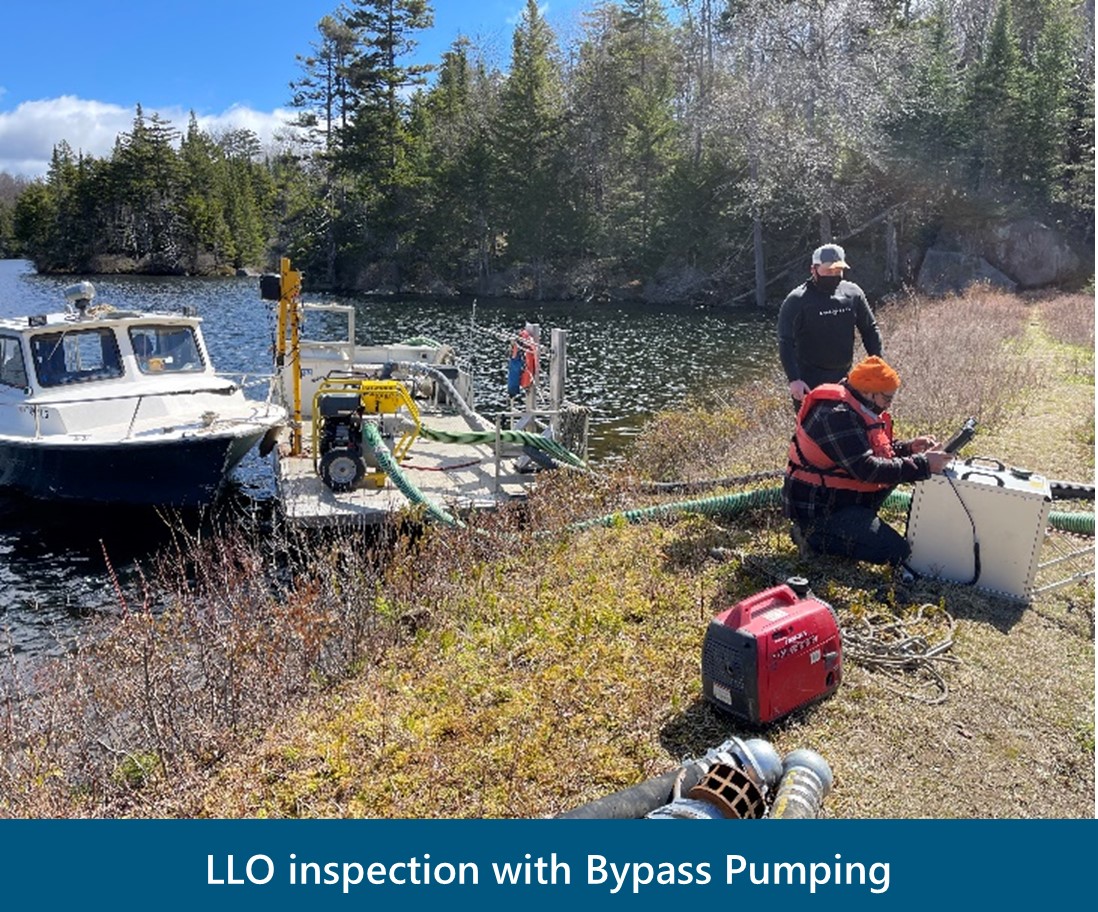
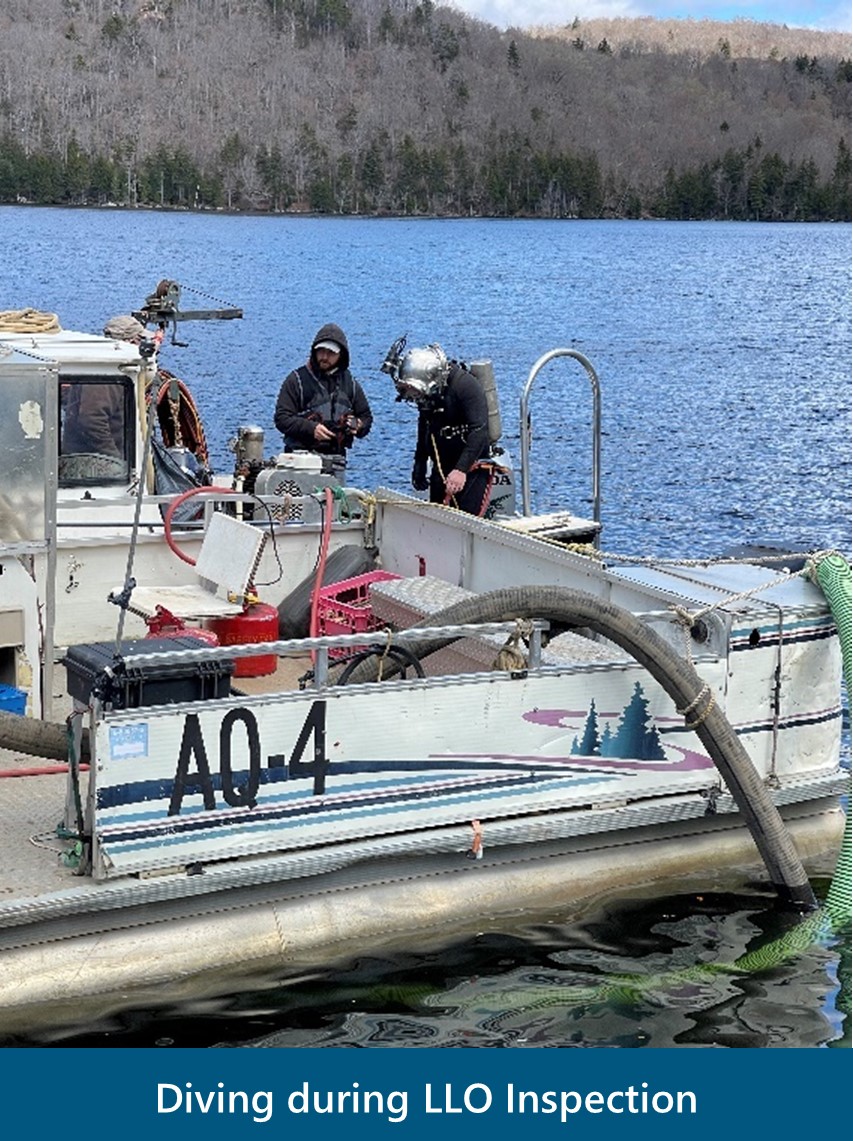
Our follow-up inspection confirmed elevated seepage adjacent to the cast iron low-level outlets with downstream valving, an area that had exhibited prior seepage and was already under observation due to the presence of pressurized piping. Based on initial findings, the Emergency Action Plan was activated under a non-failure condition. Our team had previously coordinated LLO pipe inspections at this site using divers to blind-flange the upstream end and a sewer camera robot at the downstream outlet, with bypass pumping in place to maintain required environmental flows. That institutional knowledge of the structure proved critical in assessing what was happening and how fast the response needed to move.
From Assessment to Stabilization in Real Time
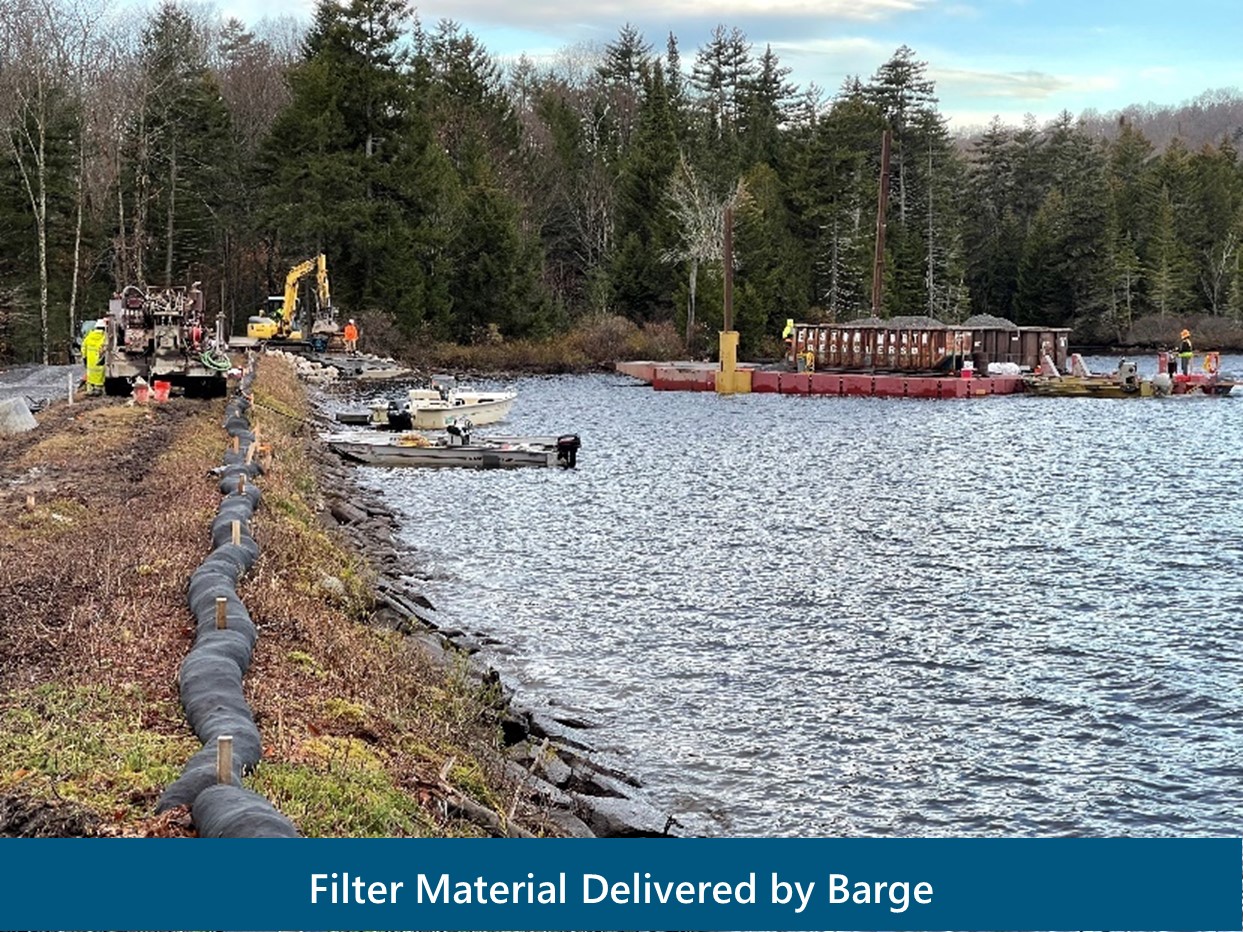
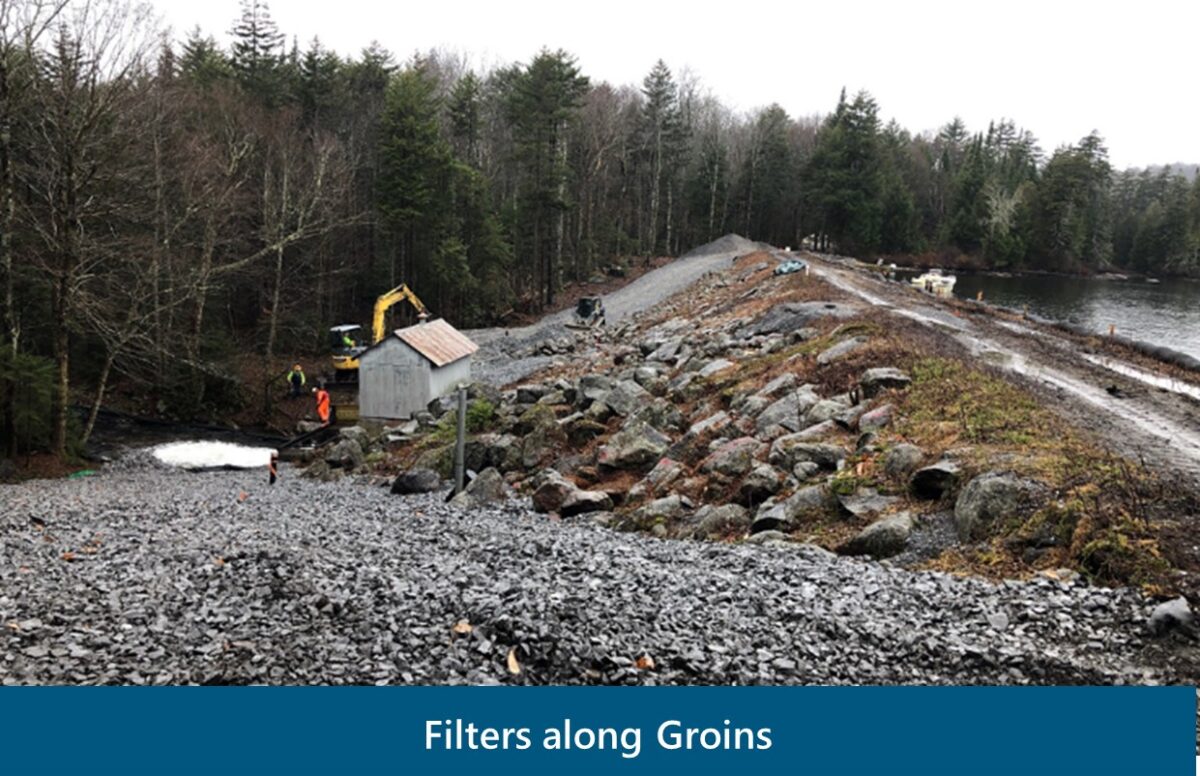
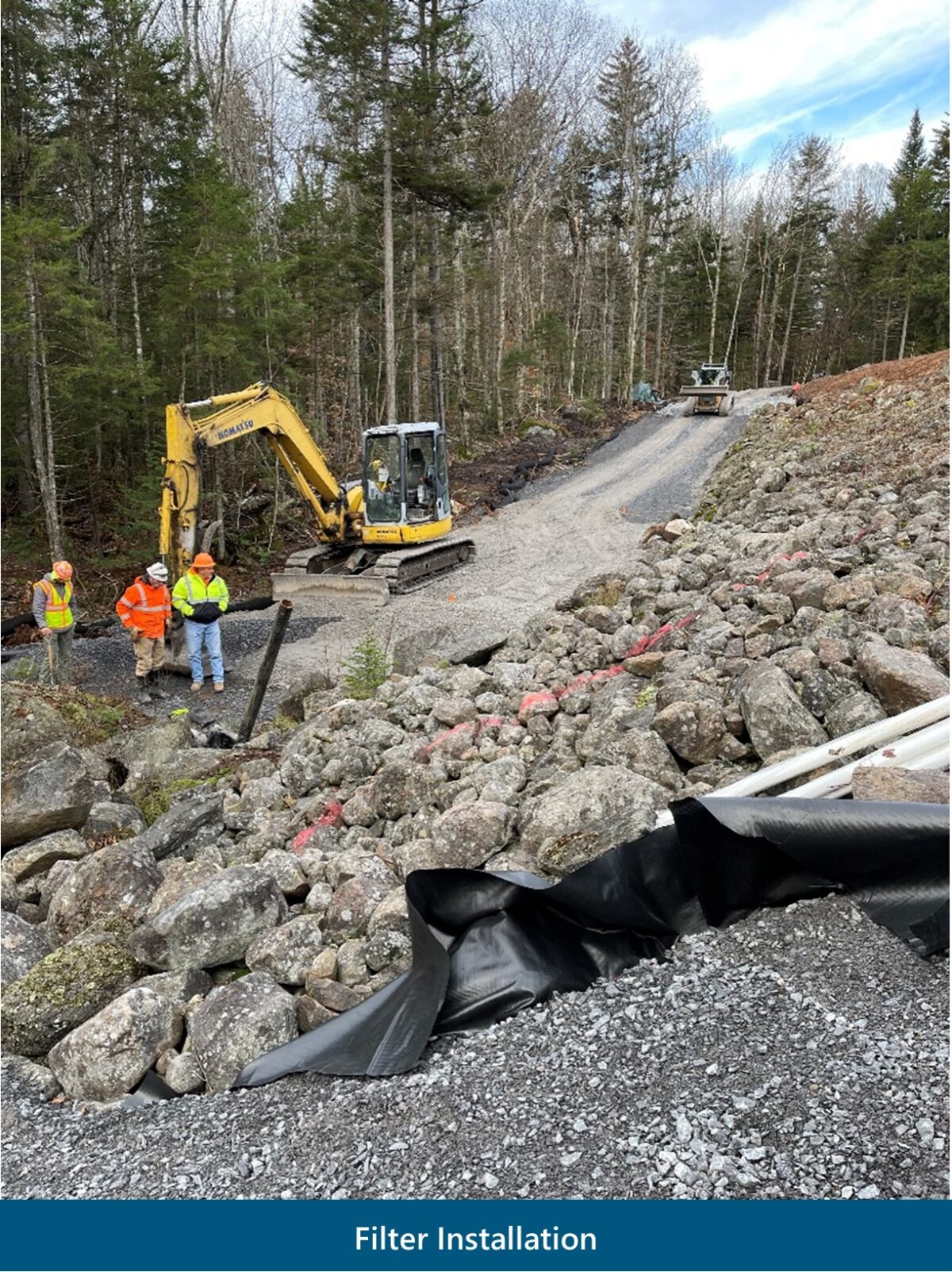
We initiated daily monitoring and completed an abbreviated Potential Failure Mode Analysis, which identified a weighted filter system at the low-level outlet and toe drains along both groins as the most effective near-term stabilization measures. Soil grab samples were collected to support the filter design. Emergency permitting and a reservoir drawdown were initiated in parallel to reduce hydraulic loading on the embankment while the stabilization work advanced.
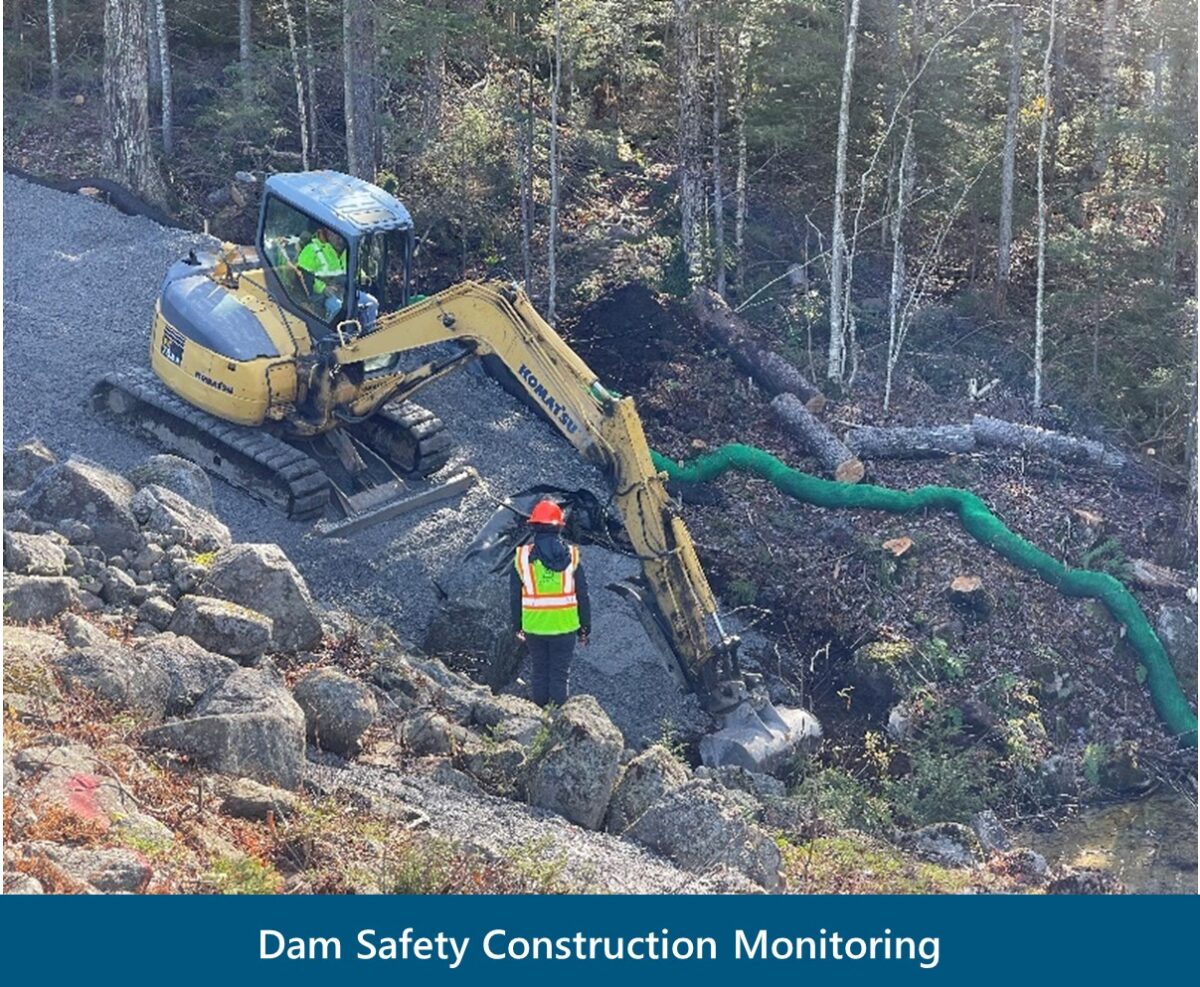
Coordinating contractor access to a site this remote added another layer of complexity to every construction decision. Our team oversaw geotechnical explorations, managed construction sequencing, and provided full-time engineering support during all dam safety-critical phases. Piezometer installation and subsurface data collected during construction will support future slope stability and seepage analyses as part of a formal engineering assessment. For a 170-year-old dam in the middle of the wilderness, the work isn’t finished when the emergency ends. It’s just entering its next phase.