Just in time for the kickoff to construction season in most states, April 20-24 celebrates National Work Zone Awareness week. This year’s theme is “Safe Actions Save Lives”, so Lisa Whitehead, PE Highways & Traffic Engineering Geographic Discipline Leader, and National Discipline Leader of Highways & Traffic Engineering Adam Allen, PE are sharing what actions we all can do to save lives.
Construction Safety Starts with the Designer
“Safety is a foundational element of every project,” Adam Allen explained. “It’s at the heart of what we do. We want to get everyone where they need to go in the safest way possible. While each project has many factors which must be considered, safety is always a priority, it’s not an add-on or afterthought.”
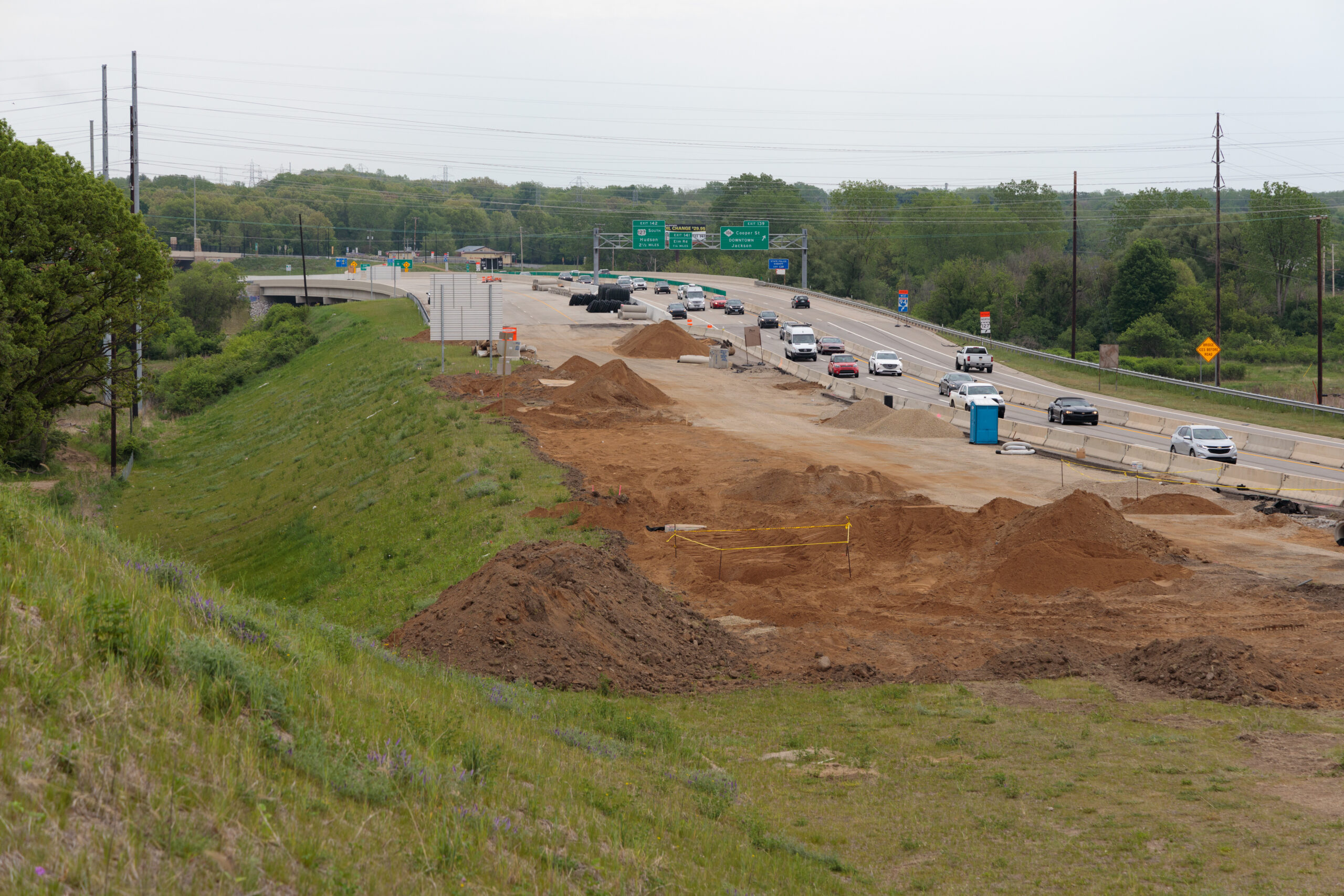
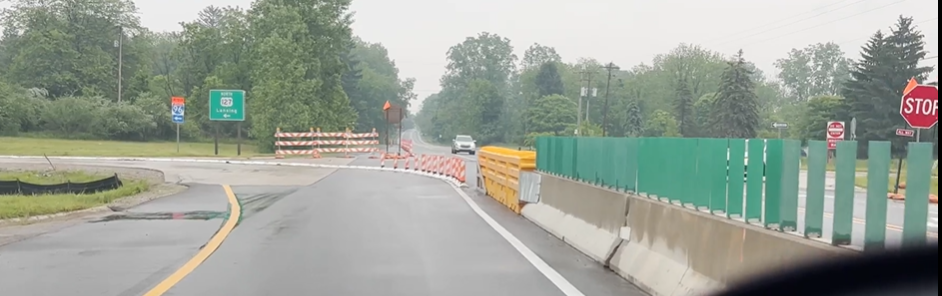
As the designers of transportation projects, we have to consider the safety of both the public roadway users along with the contractors building the project. A recent example of that is a project we did in Jackson, Michigan. Lisa Whitehead shares, “The project was at I-94 and US-127, a diverging diamond Design Build project. Safety was top priority during the construction phasing with the contractor to make sure that they had enough room to safely build the project, and making sure the motoring public would have enough space to get through the work zone safely too.” But not every project allows for the design to include extra space. What happens when there is a river or a lake?
Allen shared, “Bridge replacement projects often present some of our most difficult challenges related to the balance between mobility and safety. In most cases, you would like to utilize half of the bridge width to maintain travel lanes while working on demolishing and constructing the other half. However, having workers close to live traffic and equipment – like cranes – that can swing into active lanes pose significant risks. You can eliminate those safety risks by closing the bridge and providing a detour but sometimes those routes don’t exist, or they have significant impacts on local businesses or emergency vehicle response routes. So, it is a delicate balance, and every factor must be evaluated during design. This is why it is so important to have an experienced team of experts who prioritize safety every step of the way.”
Crew Safety
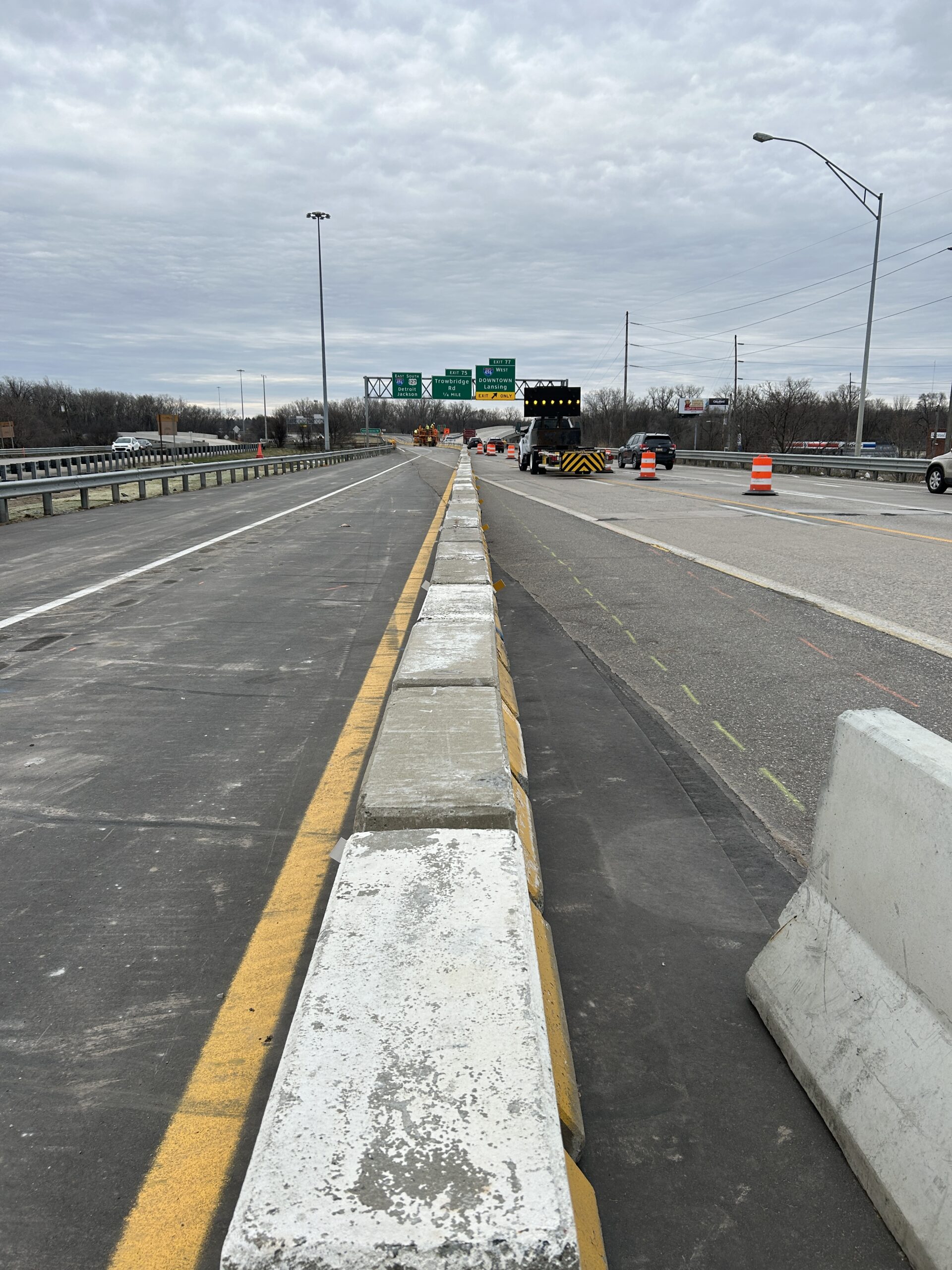
Adam Allen shared, “Safely moving the roadway users through a work zone is always at the forefront of everyone’s mind during these projects, but it is equally important to consider those working on the site during the design process and to layer in safety features as we stage construction. This sometimes requires you to think a bit outside the box. For example, you can add some temporary pavement to divert vehicles around the work zone using a contraflow lane. Or, you can leverage technology, like portable traffic signals, to help meter or control traffic through the area. You also need to make sure whatever you deploy maintains access to the site so, for example, an emergency vehicle can still access the site given an incident.
Whitehead explained that sometimes, tools can help keep crews safe. For example, on local roads, we implement automated flagger assistance devices (AFAD) when maintaining a single lane needing a two-way flagger. The AFAD runs the flagging operations so humans can stay safely away from the cars.
She further shared that each kickoff to construction season, our company’s inspectors remind everyone of safety protocols because “making sure that everyone on a site understands safety expectations, and how to operate safely in a work zone is paramount to protecting the crews themselves as well as the public.”
Creativity is Vital
One project that challenged our team was the PANYNJ’s LaGuardia Airport Redevelopment Project, where our role was to review and design various traffic control elements. This project was one of the most complex construction projects in the Northeast, as it essentially rebuilt one of the busiest airports in the country while maintaining operations. The airport itself sits on a relatively small piece of land surrounded by water and a major highway in New York City. Since the airport never stopped operations, our team faced a diverse set of challenges related all forms of transportation from pedestrians, often slowed down by suitcases and family members, to various “for-hire” vehicles including taxis and rideshares. This massive multi-billion-dollar construction project closed ramps, built flyovers, diverted roadways, established new walking paths, opened new parking facilities – sometimes changing by the day – to ensure customers safely made it to their destination.
Another project that required our team to be creative was in the I-81 Viaduct Design-Build in Syracuse, NY, where we led the work zone traffic control related to the construction of a new interchange. Our goal was to keep traffic moving safely while building the new roadways and structures on an aggressive schedule.
Allen shared, “We diverted existing traffic onto one side of the highway by cutting through the median and installing temporary pavement. That allowed us to build new permanent lanes on that side of the roadway while maintaining mobility through the area. As the new lanes were complete, we flipped traffic onto that side and did the same in the other direction. It was cool to see how all of the different pieces came together.”
Considering All Road Users
All users of the roadway, including pedestrians and bicyclists, need to be considered.
“Closing a sidewalk may limit wheelchair users or those who need to use strollers to safely get to their final destination, be it work, school, a park, etc.” Whitehead pointed out. “As such, designers must provide viable alternatives that consider these users as well.“
Our team worked closely with Essex County, NJ to secure federal funding for safety improvements at over 80 intersections. During design, these projects required the development and implementation of pedestrian detour routes. Our team carefully developed routing that not only provided connectivity throughout these communities but also prioritized local businesses, making sure not to cut them off from customers, so not to hurt the economic vitality of the area.
But it’s not just designers who should consider these users… drivers must also consider them too.
Driver Safety
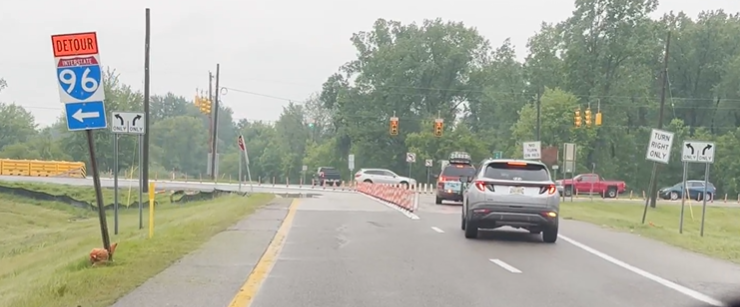
Distracted driving is always a problem, but work zones make it particularly dangerous. When drivers break the law to text, or even apply makeup, change the music at the wrong time, etc. they may miss all the signs warning them about slowdowns and changes to the roadway.
One tool we now use is temporary rumble strips, which are laid onto a road before a construction zone to warn drivers to slow down and pay attention. They give motorists both tactile and audible cues when driving over them, so they are less easily ignored than cues that are only visual on the road, even if a driver is distracted. They can be portable and non-permanent, and can be installed, removed, and repositioned, so a work zone that is short-term, or that moves can use them.
Beyond distracted driving, drivers going too fast is another big challenge. Speed radar trailers help drivers know what their speed is compared to the speed limit. Some drivers don’t think about how their speed differs from the work zone speed limit, so this tool can increase how many drivers slow down when they see they are speeding.
Highways will also put up a lot of message signs that construction projects are starting soon. Warning signs can help people plan ahead and go a different way the days they know their usual route has construction. Allen explained that you do see the volume of drivers decrease from the signs and the more days you get into a project.
A Culture of Safety
At Colliers Engineering & Design, one of our Core Values is to “Be Safe and Well.” Our highway and traffic engineers take that very seriously and have worked hard to cultivate a Culture of Safety. This culture is fundamental to the design tasks that we perform, but it also extends into the way we do business and our practices when out in the field or on a construction site. Each team member that goes on site must sign a safety checklist, review the applicable SOPs from our firm’s Health & Safety Plan, and must wear appropriate Personal Protective Equipment (PPE). We also have over 50 transportation professionals who have already signed the new ITE safety partner pledge, which invites individuals and organizations in our engineering community to formally commit to making safety a core value of their work—and to take meaningful actions that help prevent fatalities and serious injuries on our roadways.
Whether you are a driver, a pedestrian, a field worker, a project manager, a client, or a contractor, we can all make safety an essential part of every day.
If you would like to hear more from Lisa Whitehead, and some of her exciting project work, be sure to tune into her upcoming webinar entitled “Advancing Work Zone Safety: Real‑World Approaches and Project Insights” on April 23rd presented by the ITE Traffic Engineering Council.