
Built to Evolve: Why the Best Retail Spaces Are Designed for Change
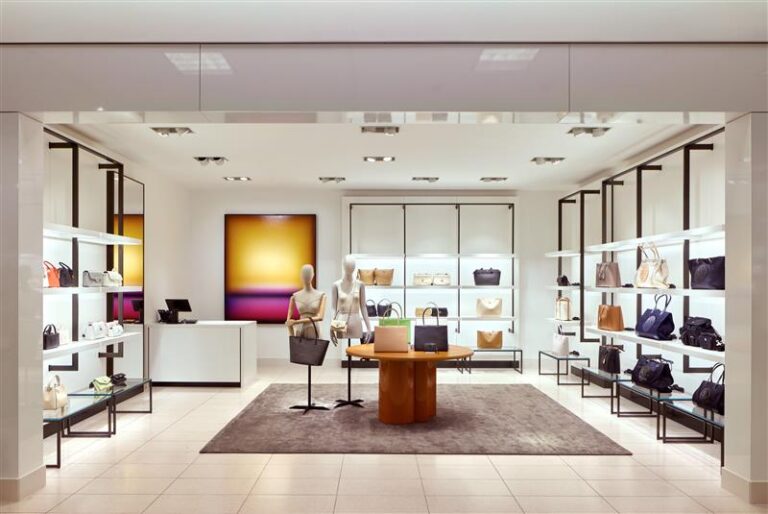
Retail Sector Leader Billiejean Curvan-Julien shares how adaptability, brand identity and human experience shape retail environments that stand the test of time.
In an era where “modern retail” is often associated with digital screens, automation and emerging technology, many brands are moving quickly to update their physical spaces. But according to Billiejean Curvan-Julien, Retail Sector Leader at Colliers Engineering & Design, modernization alone doesn’t guarantee long-term success.
“Modernizing does not ensure timelessness,” Billiejean says. “Longevity comes from thinking beyond today’s trends and building solutions designed to adapt, mature and remain relevant over time. Timelessness isn’t about resisting change; it’s about being adaptable without losing your brand’s essence. It’s the balance between consistency and evolution.”
For Billiejean, the most successful retail environments are built on three essential pillars: adaptability, brand identity and human experience. When those elements work together, technology becomes a quiet enabler – supporting immersive brand moments and seamless touchpoints rather than competing with them.
A storytelling foundation for physical space
Billiejean’s approach to retail design is shaped by an unconventional background rooted in animation and experiential storytelling. Before working in retail environments, she designed immersive exhibits that translated ideas into physical experiences through sound, visuals, and spatial design.
That perspective later guided her work at Starbucks, where she helped design and develop flagship stores, new retail formats, and global prototypes, and at Google, where she led large-scale experience centers that blended architecture, immersive design, and digital integration.
Today at Colliers Engineering & Design, she applies those principles to help clients rethink retail footprints that balance customer experience, operational efficiency, and long-term flexibility.
Designing modernization with intention
Rather than approaching modernization as a checklist of new technologies, Billiejean emphasizes starting with brand purpose and customer behavior.
“We’ll sometimes hear, ‘We want digital everywhere because our competitor is doing it,” she explains. “The real question isn’t what technology we add to stores—it’s how we design spaces that will drive intended impact and that anticipates technology solutions that are evolving faster than the build cycle.”
For her, the focus remains on solutions that can grow and adapt as needs change.
“What’s adaptable? What’s flexible? What will still make sense five years from now?” she says. “Those are just some of the questions that help guide resilient retail strategies.”
By studying how customers engage between physical and digital touchpoints, design teams can identify opportunities to improve flow, experience and efficiency while maintaining a consistent brand presence.
Where technology fits best
Technology plays an important role in modern retail, but Billiejean sees it as most effective when it feels seamless.
“Digital tools and solutions have become ubiquitous, and they are here to stay,” she says. “We can filter every solution through a simple question to begin with: Does this technology solution enhance the experience, or does it distract?”
Sensory elements such as lighting, sound, layout and tactile interactions continue to shape how customers connect with a space in ways that online platforms cannot fully replicate.
“The physical experience still matters,” she explains. “it’s the three-dimensional expression of the brand, expressing identity through architecture, visual merchandising and experiential moments”
When integrated thoughtfully, technology can support that experience rather than compete with it.
How retail footprints are shifting
Across the industry, Billiejean has observed brands refining how they approach physical space.
Established retailers are optimizing store footprints, using data and digital tools to operate more efficiently within leaner layouts. At the same time, digitally native brands are expanding into brick-and-mortar spaces to create tangible customer experiences and test new concepts.
Pop-ups, immersive environments and flexible store formats are becoming tools for experimentation and engagement, allowing brands to learn what resonates before scaling.
Regardless of size or strategy, Billiejean notes that long-term success consistently comes back to adaptable design principles.
Evolving while staying authentic
For brands navigating modernization, Billiejean emphasizes the importance of staying rooted in core identity while creating design frameworks that can adapt to changing customer expectations.
Retail spaces can evolve in layout, technology and experience without losing what originally made a brand resonate.
“You can change how retail shows up for different audiences,” she says. “But the heart of the brand should remain clear.”
Designing for what comes next
At Colliers Engineering & Design, Billiejean works with clients to create retail environments that are both innovative and resilient, supporting growth while remaining flexible for future change.
“We design spaces that can be tested, refined and scaled,” she explains. “That way brands aren’t locked into something that won’t serve them long term.”
For her, thoughtful modernization isn’t about keeping up with trends. It’s about building environments that continue to perform as customer behavior, technology, and markets evolve.
“When modernization supports adaptability and human experience together,” she says, “that’s when retail spaces truly succeed.”