CSX Castleton Bridge: A Century-Old Hudson River Crossing Gets Its Next Chapter
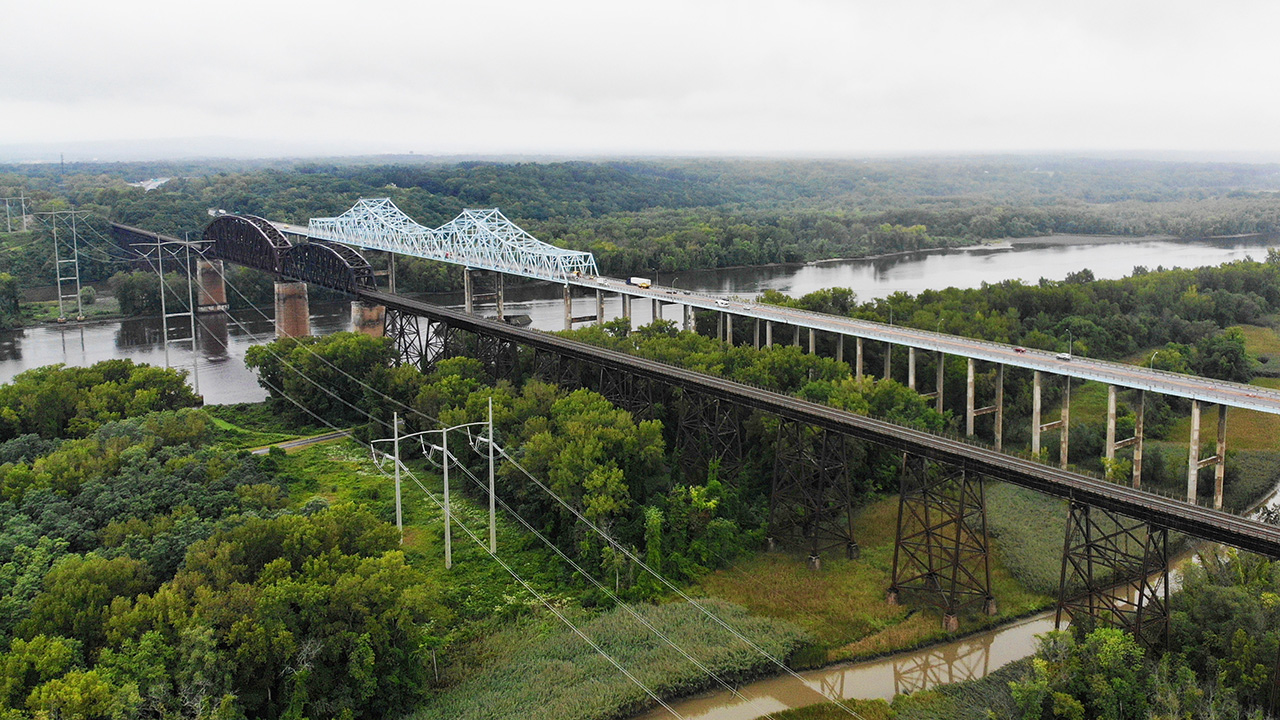
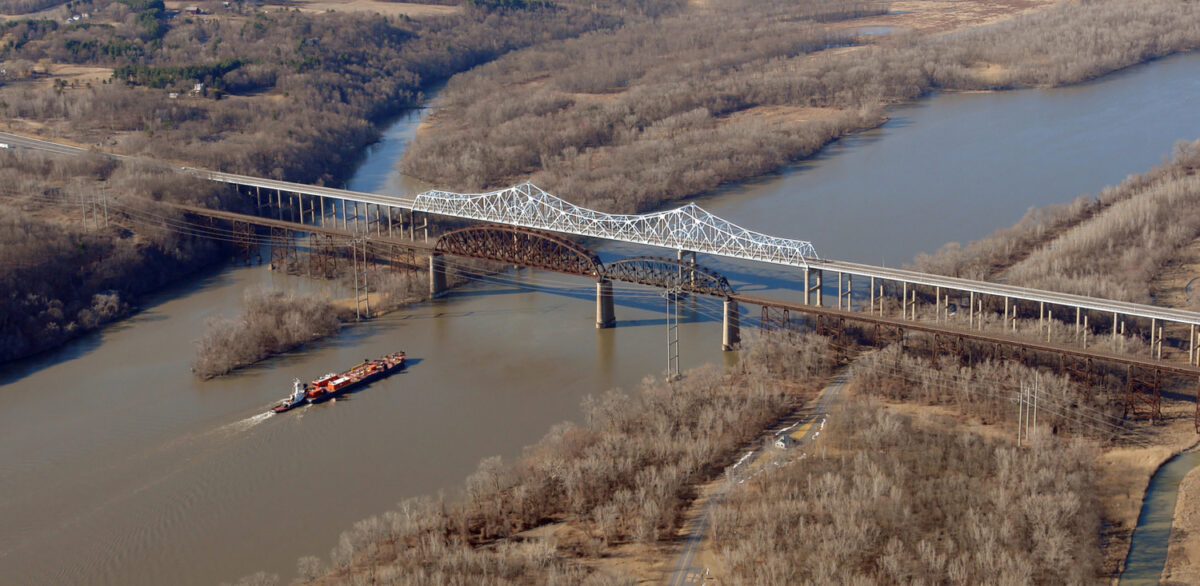
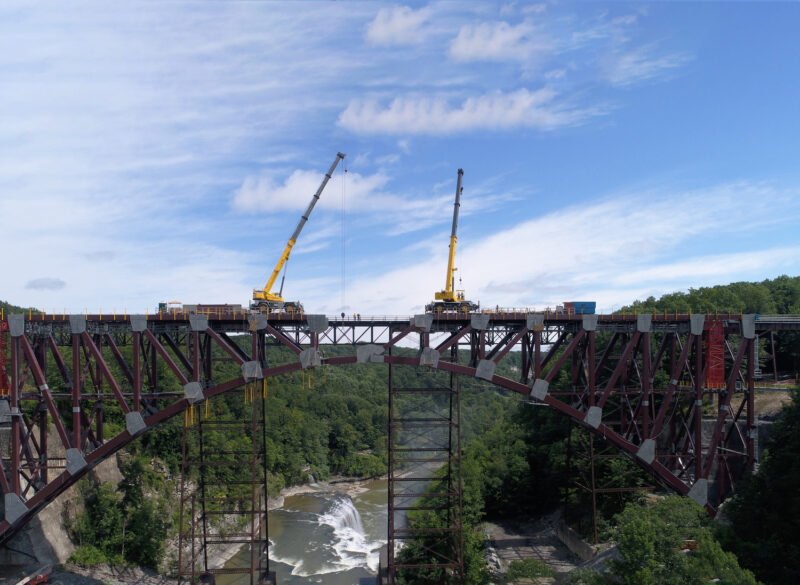
Stretching 5,255 feet across the Hudson River near Castleton, New York, CSX’s Bridge at Milepost QG 8.48 is the kind of structure that doesn’t have an easy replacement. Originally constructed in 1921, the bridge features 602-foot and 409-foot truss main spans, 52 approach girder spans, and 25 steel towers ranging from 30 to 135 feet in height. It remains a vital link in CSX’s network, and the railroad retained our firm to perform a multi-year rehabilitation evaluation and design project to extend its service life while keeping rail operations running.
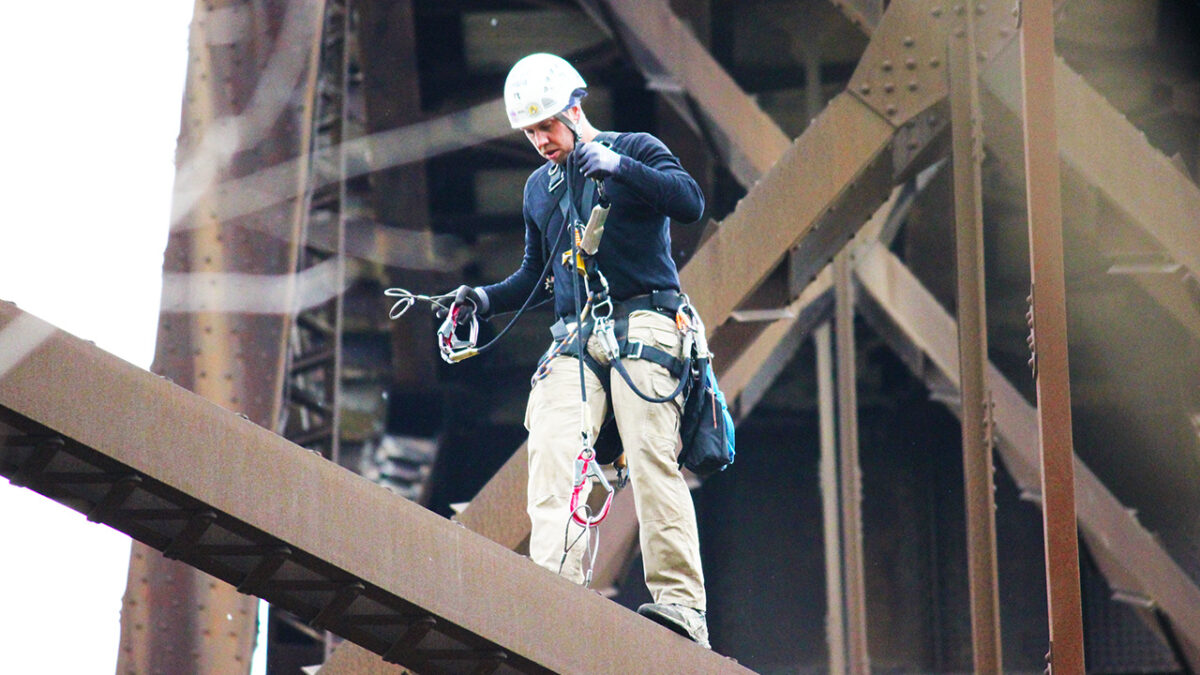
The project advanced through multiple phases. The initial phase involved comprehensive load rating of all superstructure and substructure elements in accordance with the AREMA Manual for Railway Engineering. Subsequent phases included in-depth, hands-on climbing inspections of select towers and visual assessments of others to document deterioration and prioritize repairs. Rehabilitation plans were developed from those findings, with additional tower evaluations and design work phased to align with CSX’s multi-year budget and capital planning goals.
A 700-Ton Problem Solved with 9,000 Pounds of Steel
Among the most complex elements of the rehabilitation was the replacement of a heavily deteriorated counterweight trunnion bearing assembly on the bridge’s 1914-vintage, single-leaf Strauss Heel Trunnion bascule span. The work had to be completed within a short marine work window imposed by the US Coast Guard and no more than three 24-hour track outage windows scheduled by CSX.
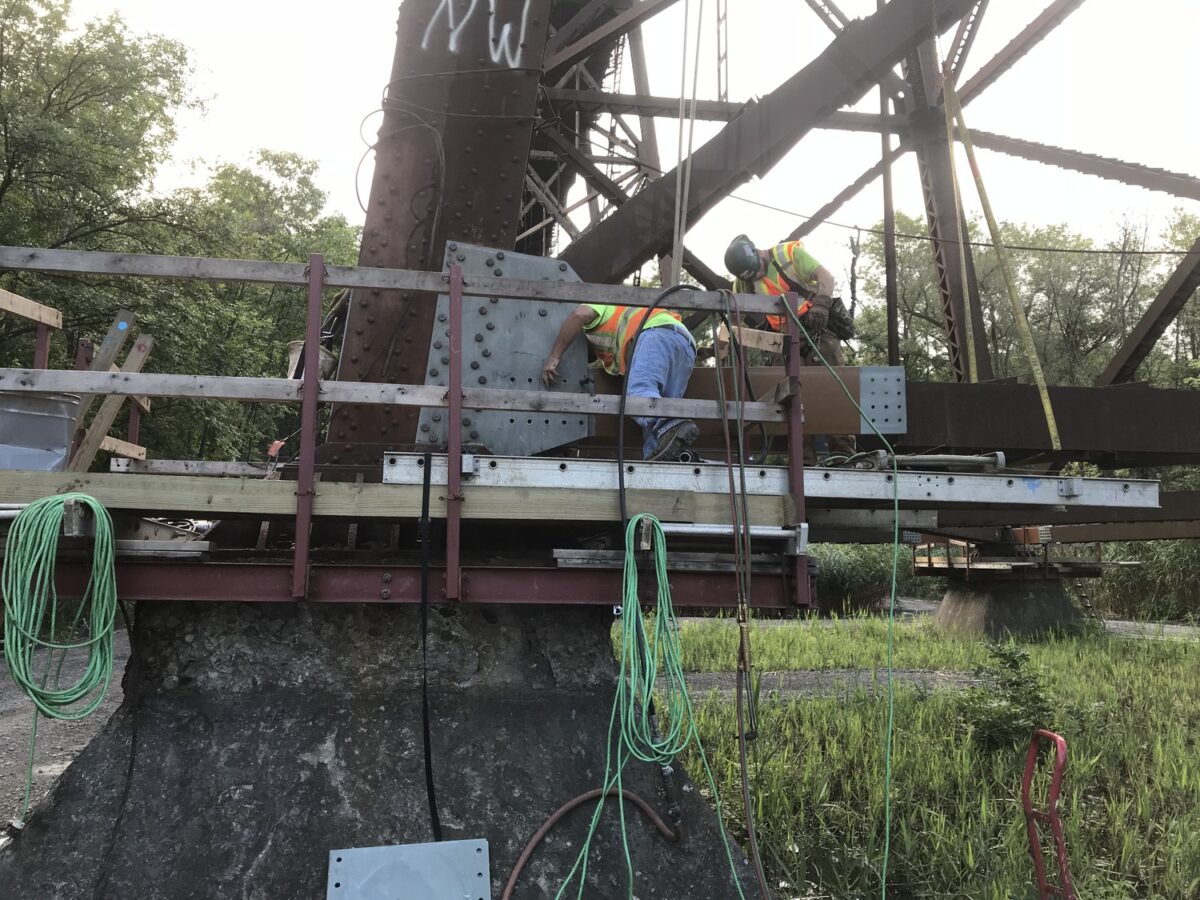
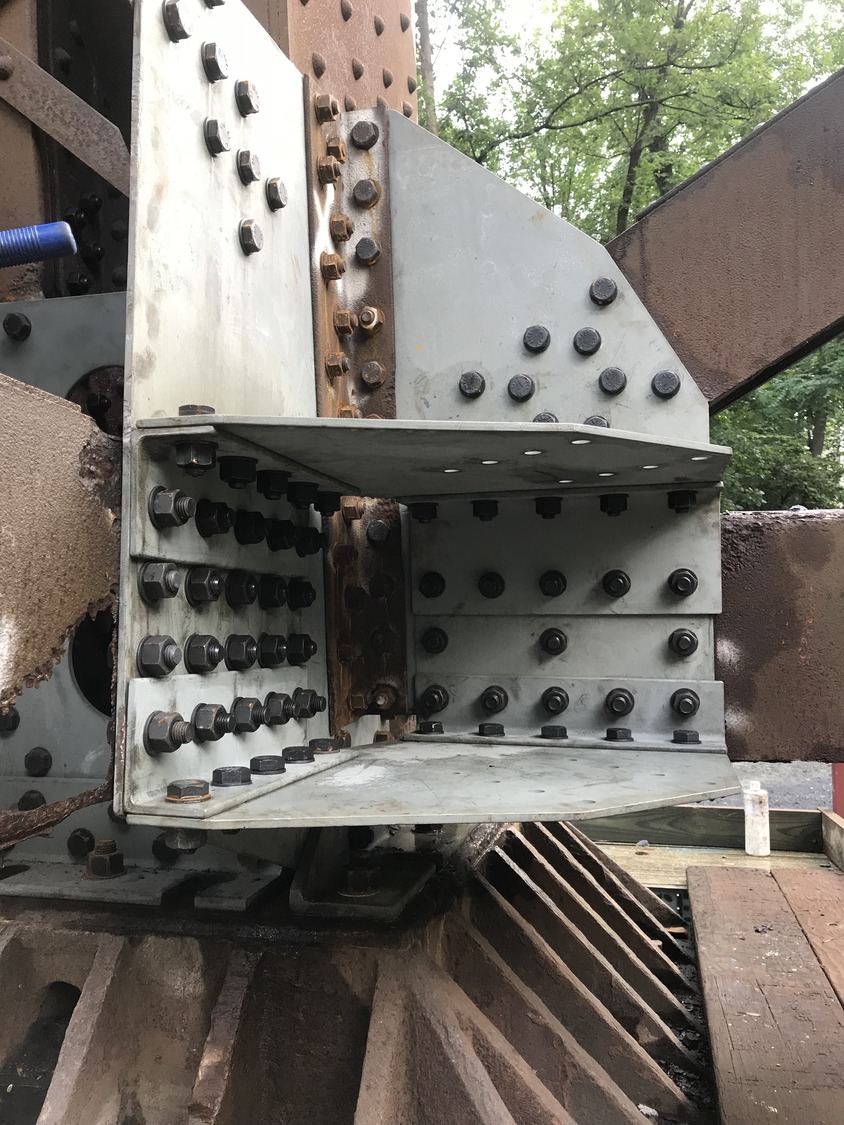
Our structural team, collaborating with Stafford Bandlow Engineering on the mechanical side, designed a jacking system to jump the 700-ton counterweight load around the bearing assembly for removal and replacement. The system used horizontal and vertical hydraulic jacks with temporary steel supports and bracing attached to the counterweight tower, requiring just 9,000 pounds of temporary steel. It avoided the need for marine-based foundations entirely and saved CSX nearly $1 million over a procedure previously proposed by another firm. The bearing replacement included a new sleeve, pin, bronze bushing, and sleeve bolts, with line boring and a dry ice and liquid nitrogen bath used to temporarily shrink the pin and achieve necessary tolerances. Operational testing using strain gauges confirmed reduced friction and operating loads after completion.
Beyond inspection and structural design, our team prepared federal and state permit applications including USACE Section 404/10, NYSDEC Section 401 Water Quality Certification, and NYSDOS Coastal Zone Consistency Determination. Construction began in spring 2018 and reached completion in 2022, successfully restoring a historic Hudson River crossing that CSX and the region’s freight network will depend on for decades to come.