

Texas has emerged as one of the fastest-growing data center markets in the country, consistently ranking second to Virginia on a national scale. The forces driving this momentum are clear: power availability anchored by natural gas, a permitting environment friendly to development, and vast stretches of undeveloped land ready for large-scale investment. The state legislature has made its position unmistakable—Texas is open for this business.
This past year has pushed that growth into an entirely different gear. Following the landmark announcement of the Stargate Project—a 4-million-square-foot flagship facility in Abilene, Texas—new deals have been surfacing across the state at a remarkable pace. From the DFW metroplex and San Antonio to Wichita Falls, Amarillo, El Paso, West Texas, and rural communities, the footprint of this industry is expanding in every direction.
5 GW
of power infrastructure
4,000
acres of data center development
4M sq. ft.
flagship facility
The Gold Rush
Experts are calling this growth the Gold Rush, and both the public and local municipalities are taking notice. But with expansion at this pace, questions are emerging— about water usage, traffic, noise, and what this wave of development means for the communities it touches. Logan McWhorter, PE, DFW Civil/Site Lead at Colliers Engineering & Design explores why education is essential to addressing the misconceptions, that left unchecked, have the potential to shape the long-term trajectory of these projects.
According to McWhorter, data centers are not a new phenomenon, what’s new is the speed at which they are arriving. And that is what is drawing attention. When communities see massive facilities taking shape seemingly overnight, questions naturally follow, and the problem is that those questions are often filtered through outdated information. Much of what the general public understands about data centers is rooted in knowledge that is over a decade old. Yet, the industry has transformed significantly since then, with meaningful advances in efficiency, site planning, and environmental performance that public perception simply hasn’t recognized. The available information is lagging behind the reality of what modern data centers actually look like, how they operate, and what they demand from the communities that host them.
Data centers are multifaceted by nature, and that complexity is easy to underestimate. Community leaders and residents may recognize that these are large, high-value facilities, but what happens inside them, how they are engineered, and how they interact with local infrastructure remains largely opaque to those outside the industry.
The truth about water
The perception that data centers are massive water consumers is one of the most persistent misconceptions in the industry, and according to McWhorter, it’s one that no longer reflects reality. “Water is not being used in the same way today; data centers are being chilled differently, which was a major driver for that water consumption,” he explains. A decade or more ago, evaporative cooling was the standard method for preventing servers from overheating—and as the name suggests, that water was lost to evaporation through outdoor chillers, with dehumidification requirements in climates like Texas adding further consumption on top. While that process did recycle approximately 70% of water used, the losses were significant. Today, the industry has moved to liquid-cooled rack systems operating on a closed-loop circuit—a 75/25 mix of water and glycol pumped directly into server racks, continuously recycled through the same system indefinitely, with virtually no loss.
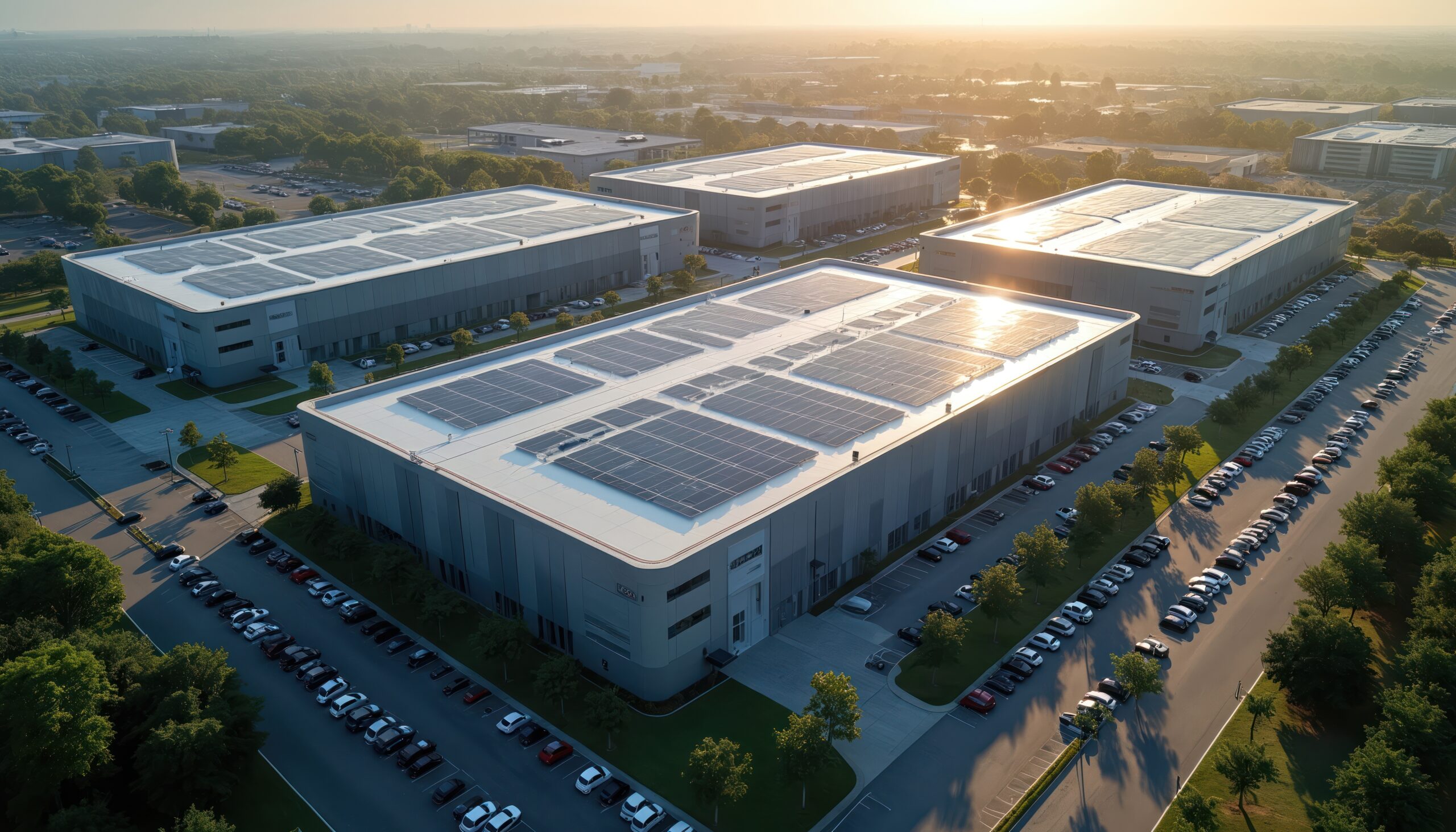
The other side of this conversation is one that rarely comes up according to our expert: beyond cooling, data centers simply don’t consume much water at all. A 250,000-square-foot facility running on a 25-acre footprint might operate with as few as 40 people on-site daily on average—a kitchenette, a breakroom, four bathrooms. Place that same footprint into a single-family residential development, and the water demand comparison isn’t even close. The data center, equipped with a modern closed-loop cooling system, would consume a fraction of what those homes would require, he emphasized. The industry evolved out of necessity, computational power demands drove the push toward greater efficiency, and water consumption was transformed in the process.
Traffic planning
When it comes to traffic, there are two distinct phases worth understanding—and they tell very different stories. On the operational side, the impact is minimal. A facility that may span hundreds of thousands of square feet typically employs between 40 and 75 people across all shifts in a given day, yet parking requirements mandated for a building of that size often far exceeds what is actually needed. The result is an oversized parking field that introduces its own downstream considerations; all to accommodate a workforce that, in practice, generate little to no meaningful traffic pressure on surrounding roads.
The more significant traffic story happens during construction. With anywhere from 1,000 to 1,500 workers on site daily, the volume of vehicles moving in and out of a project during the build phase represents an impact that the completed, operational facility will never come close to matching. This distinction matters because construction traffic is temporary and manageable with proper planning, while the long-term operational footprint is remarkably light for a building of its scale. Understanding this difference is key to having an accurate conversation about what a data center actually means for the roads and communities around it.
Noise Pollution
The assumption that a facility of this scale must be a disruptive permanent neighbor is understandable, but it doesn’t reflect how modern data centers are engineered and sited. The primary source of operational noise is cooling equipment: HVAC units and large chiller systems that produce a low, continuous hum. What most people don’t realize is that these systems are deliberately positioned behind attenuating walls designed to absorb and contain sound, and every development is planned with local noise ordinances in mind—none of which, McWhorter notes, come close to being in violation under normal operations. Like traffic, the louder reality belongs to the construction phase, not the finished facility.

Built what’s next with the expertise to get it right
At the end of the day, McWhorter’s message is straight: education is the path forward, and it has to happen on two fronts simultaneously. The public deserves access to current, accurate information about what these facilities are and how they function. But equally important is the education happening at the jurisdictional level; the authorities reviewing permits, approving projects, and shaping the regulatory environment that determines how and where this infrastructure gets built. These agencies are encountering data center development in real time, often without the institutional knowledge to fully evaluate what’s in front of them, and the industry has a responsibility to meet them with patience, transparency, and expertise.
That is precisely where the right engineering partner makes all the difference. Getting water, traffic, and noise right isn’t just about checking compliance boxes—it’s about anticipating community concerns before they become project obstacles and building the kind of trust with municipalities that allows development to move forward with confidence. Our team brings that perspective to every engagement, backed by a track record that spans over 4,000 acres of data center development and more than 5 gigawatts of power infrastructure delivered across the country: from Texas and Arizona to Ohio, North Carolina, and North Dakota, for some of the most prominent clients in the industry. We have boots on the ground in Texas, licensure across the states where this market is expanding fastest, and the depth of experience to navigate both the engineering and the community dynamics that define whether a project truly succeeds
Logan McWhorter, PE, DFW Civil/Site Lead at Colliers Engineering & Design will be at the BISNOW State of The Market Panel in Dallas, TX on April 21, 2026.