
Highway Design
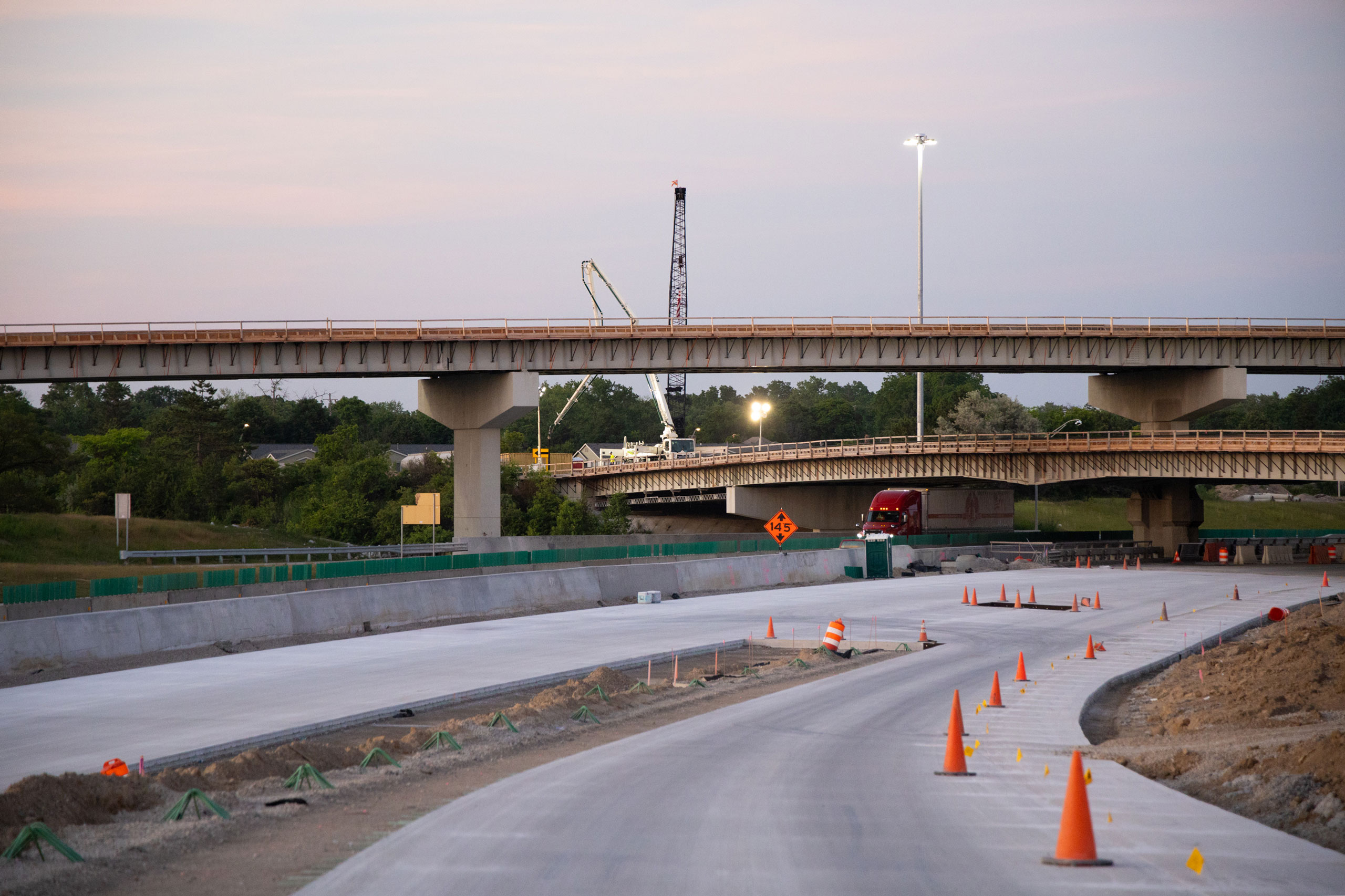
How our highway design services support your project
Getting from point A to point B is never as straightforward as it sounds. Roadways cross jurisdictions, displace utilities, thread through developed land, and carry the weight of daily life for the communities they connect. Designing them well takes more than just technical know-how. It takes a team willing to ask hard questions and work through competing priorities to find solutions that hold up.
From conceptual planning and alignment studies through final design, permitting, and construction support, we work across the full project lifecycle. Local streets, county roadways, state highways, interstate corridors — whatever the scale, we’re ready to meet you where your project is.
- Alignment Studies & Conceptual Design
- Highway & Roadway Design
- Intersection & Roundabout Design
- Maintenance & Protection of Traffic Plans
- Ramp, Jughandle & Interchange Design
- Right-of-Way (ROW) Acquisition
- Roadway Drainage & Stormwater Management
- Roadway Jurisdictional Maps
- Roadway Safety Audits & Safety Upgrades
- Traffic Signs, Markings & Sign Panel Design
- Utility Accommodation & Relocations
Our approach
Our roadway specialists bring experience across urban and rural environments, from minor geometric upgrades to multi-million-dollar corridor reconstructions. We collaborate closely with our traffic, structural, and site civil teams to deliver integrated solutions — whether that means supporting a signalization project, a bridge replacement, or access design for a large development.
As available land grows scarcer and agency requirements continue to evolve, getting a roadway project to construction takes as much persistence as it does expertise. We know the permit processes, we anticipate the constraints, and we keep projects moving forward.
Designing roadways that perform
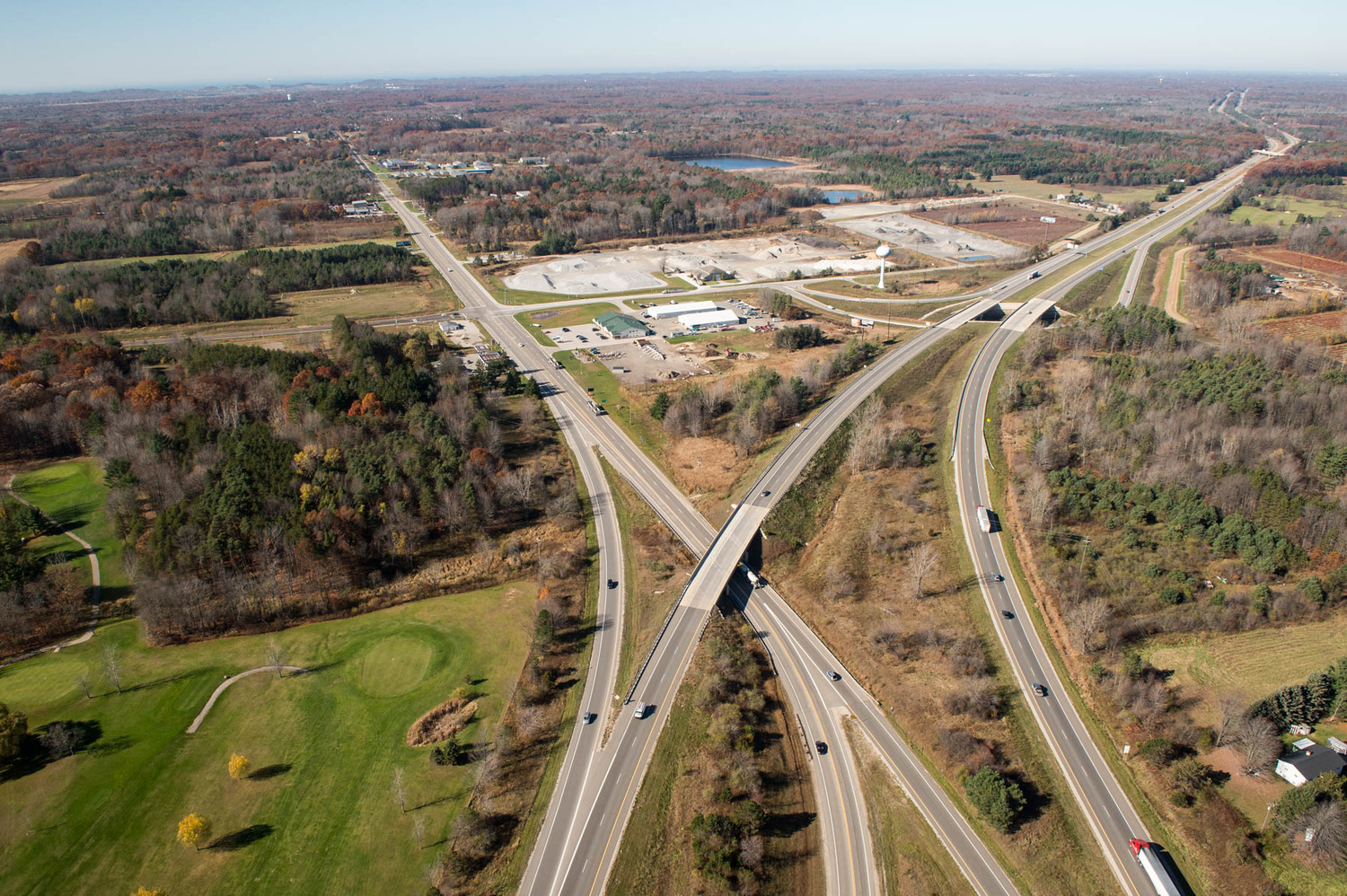
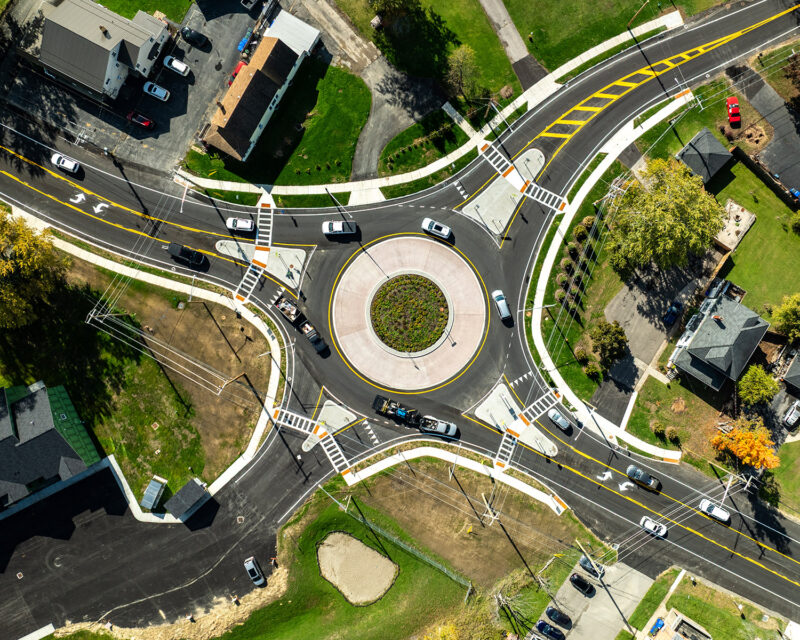
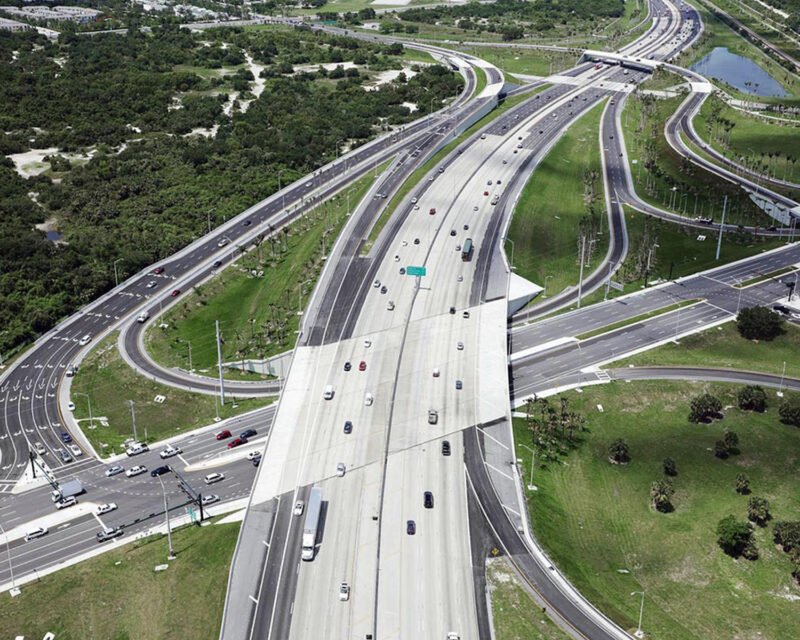
Highway design shapes how communities move, connect, and grow. From early alignment studies and conceptual planning to detailed highway and roadway design, we develop corridors that balance safety, capacity, and long-term durability. Our work considers every element of performance, including intersection and roundabout design, ramp and interchange configurations, traffic flow, and constructability, ensuring each roadway functions cohesively as part of a larger transportation network.
Integrated solutions for complex transportation networks
Successful corridors require coordination across disciplines and stakeholders. Our team develops maintenance and protection of traffic plans, roadway drainage and stormwater systems, utility accommodation and relocations, and right-of-way acquisition strategies that keep projects advancing efficiently. We also provide roadway safety audits, jurisdictional mapping, and the design of traffic signs and pavement markings to enhance clarity and compliance. By evaluating site conditions, regulatory requirements, and community needs early in the process, we create solutions that are technically sound and practically executable.
Frequently asked questions
Highway design engineers are responsible for designing safe roadways and transportation systems for safe, everyday travel. They analyze traffic patterns to determine the overall layout of the roadway and take into consideration how the design may impact the surrounding communities and environment. Highway design engineers are well versed in computer-aided design (CAD) software programs, and modelling tools to create detailed and efficient designs for small- and large-scale projects. They also collaborate with traffic engineers, structural engineers, and site/civil engineers. Whether in an urban or rural area, highway designs are constantly being improved for safety and ease of use.
Depending on your project needs, the type of software you choose to design highways and roadways may vary. Some of the most used software by highway engineers include Civil 3D (AutoDesk), OpenRoads Designer, InfraWorks, and AutoCAD. Each program offers different features to help accelerate your success. From BIM software to 3D modeling and grading capabilities, designing roads can be made easier and more efficient using these cutting-edge tools.
Prior to designing a highway, engineers must consider many important factors before construction. Determining the location of highway, economic feasibility, cost, projected flow of traffic, and safety of travelers and surrounding communities are paramount when designing a highway. Additionally, engineers must remain cognizant of how their design may impact the environment and its ecosystems. After these factors are taken into consideration, highways are constructed through a series of planning and design. Moreover, surveys are conducted to evaluate the soil condition and topography of the site. Site preparation then takes place which may involve removing existing structures or vegetation. Next, the base and subbase are laid down in layers to support the weight of vehicles. After this takes place, paving and compaction occur where asphalt is distributed and compacted by machinery to ensure the road is smooth. Once complete, road markings and various symbols are placed on the road to guide drivers and enhance safety while traveling.
The profile grade line is typically located on the centerline of the roadway.
Let’s talk about your next project!
Our multidisciplinary approach to design, combined with a deep understanding of the industry and passion for innovation, has positioned us as leaders consistently delivering outstanding results in shaping the built environment.